News
How to choose a two-component glue dispenser
choosing the right two-component adhesive dispensing machine involves a systematic approach to matching your material properties, application requirements, and production goals. Here’s a breakdown of the key factors and steps:
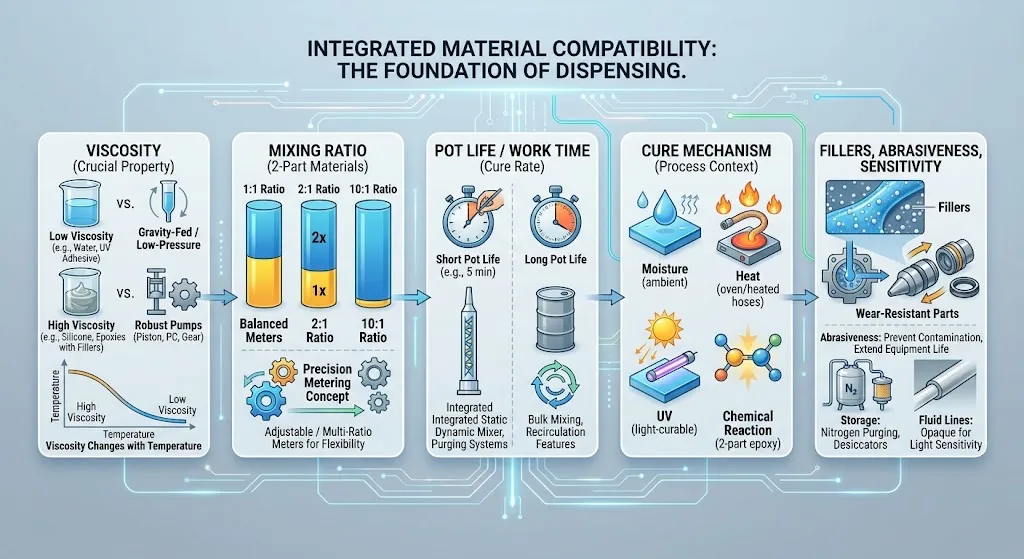
1. Material Compatibility (The Foundation):
-
Viscosity: This is crucial. Low-viscosity materials can be handled by gravity-fed or low-pressure systems. High-viscosity pastes or materials with fillers require robust pumps (piston, progressive cavity, or gear pumps) and often need pressure tanks or drum unloaders. Be aware if viscosity changes significantly with temperature.
-
Mixing Ratio: Two-component materials come in various ratios (e.g., 1:1, 2:1, 10:1). The machine must be capable of accurately metering both components according to the manufacturer’s specified ratio. Systems with adjustable ratios offer greater flexibility.
-
Pot Life/Work Time: This dictates how quickly you need to mix and dispense the adhesive before it cures. For materials with short pot lives, you’ll need efficient mixing systems (often static or dynamic mixers integrated into the dispensing head) and potentially features like purging or recirculation to prevent curing within the equipment.
-
Cure Mechanism: Is it a moisture cure, heat cure, UV cure, or chemical reaction? While the dispensing machine primarily handles the mixing and application, understanding the cure mechanism is important for overall process design and might influence the choice of features (e.g., heated hoses for heat-curable materials).
-
Fillers & Abrasiveness: If the adhesive contains fillers (e.g., glass beads, metal powders), they can be abrasive. The machine’s wetted parts (seals, pumps, nozzles) need to be made of wear-resistant materials to ensure longevity and prevent contamination.
-
Sensitivity: Some materials are sensitive to moisture, air, or light. Your dispensing system might need specific features like nitrogen purging in storage tanks, desiccators, or opaque fluid lines.
-
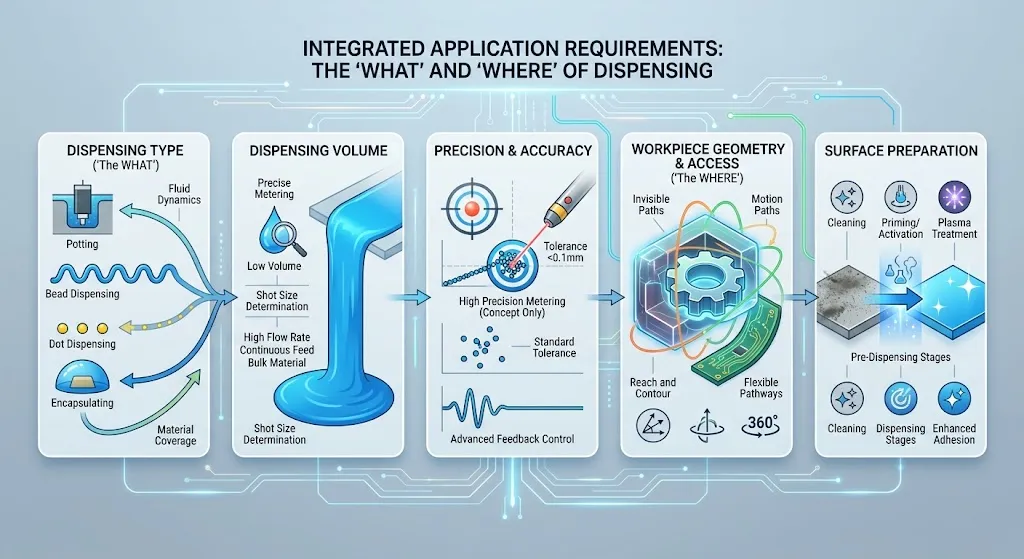
2. Application Requirements (The “What” and “Where”):
-
Dispensing Type: Are you doing potting (filling a cavity), bead dispensing (laying down a line), dot dispensing (precise points), or encapsulating? Different application types might favor specific pump technologies and nozzle designs.
-
Dispensing Volume: Determine the amount of adhesive needed per application. High-volume applications require systems with larger reservoirs, higher flow rates, and potentially continuous feeding capabilities. Low-volume dispensing demands precision metering.
-
Precision & Accuracy: How critical is the exact amount and placement of the adhesive? Applications with tight tolerances require high-precision metering pumps (e.g., progressive cavity pumps) and sophisticated control systems. Less critical applications might use simpler piston pumps.
-
Workpiece Geometry & Access: Consider the shape and size of the parts you’re bonding or potting. The dispensing head needs to reach all required areas. Robotic systems or automated gantries offer flexibility for complex geometries.
-
Surface Preparation: Do the substrates need cleaning, priming, or plasma treatment before dispensing? Some dispensing systems can integrate surface preparation steps for a streamlined process.
3. Production Volume & Automation Level (The “How Much” and “How Fast”):
-
Production Rate: Calculate your desired output (parts per hour/day). This will help determine the required flow rate and cycle time.
-
Manual vs. Semi-Automated vs. Fully Automated:
-
Manual: Operator controls the dispensing process. Suitable for low-volume production, rework, or prototyping. Relatively low initial cost.
-
Semi-Automated: Operator loads/unloads parts, but the dispensing cycle is automated (e.g., robotic arm applies the adhesive). Offers improved consistency and higher throughput than manual systems.
-
Fully Automated: Parts are automatically fed, dispensed, and potentially cured or inspected. Ideal for high-volume, high-precision manufacturing. Requires significant initial investment but offers the lowest cost per part in the long run.
-
-
Integration: Will the dispensing machine be a standalone unit or integrated into an existing production line? Consider communication protocols (e.g., PLC, fieldbus) and mechanical interfaces for seamless integration.
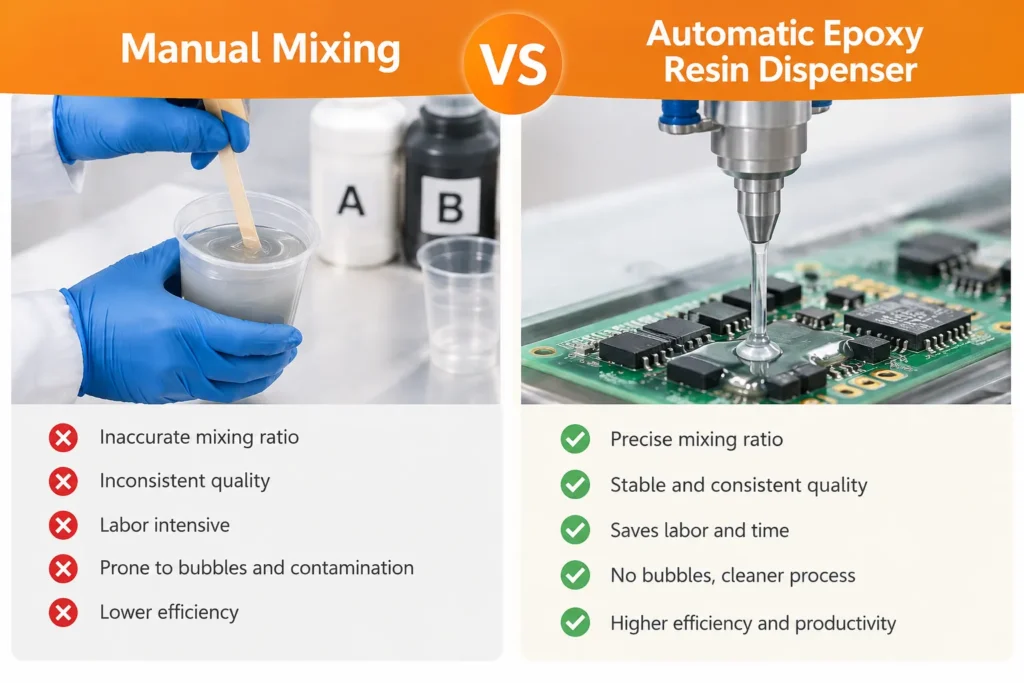
Manual Mixing VS Automatic Epoxy Resin Dispenser
4. Additional Considerations (The “What Else”):
-
Ease of Use & Maintenance: Look for intuitive operator interfaces, easy access for cleaning and maintenance, and readily available spare parts. Consider the level of technical skill required to operate and maintain the system.
-
Cost: Initial purchase price is just one factor. Also consider operating costs (material waste, energy consumption), maintenance costs, and potential return on investment (ROI).
-
Supplier Reputation & Support: Choose a reputable supplier with experience in your industry. Evaluate their technical support capabilities, training programs, and service availability.
-
Environmental Regulations: Ensure the machine complies with relevant environmental standards regarding emissions, waste disposal, and operator safety.
Steps to Choose Your Dispensing Machine:
-
Define Your Needs: Create a detailed document outlining all material properties, application specifications, and production goals based on the points above.
-
Consult Adhesive Manufacturers: Talk to the suppliers of your two-component adhesive. They often have recommendations for compatible dispensing equipment and can provide valuable insights into material handling nuances.
-
Contact Dispensing Machine Suppliers: Provide them with your requirements document. Request quotes, technical specifications, and potentially equipment demonstrations or trials.
-
Evaluate Pump Technologies: Understand the strengths and weaknesses of different pump types (gear, piston, progressive cavity, etc.) for your specific application and material.
-
Consider Integration & Automation: Determine the appropriate level of automation for your production volume and budget.
-
Compare Quotes & Total Cost of Ownership: Look beyond the initial purchase price and consider long-term operating and maintenance costs.
-
Request Demonstrations & Trials: Seeing the machine in action with your material is invaluable for assessing performance, accuracy, and ease of use.
-
Check References & Reviews: Talk to other users of the equipment to gather feedback on their experience with reliability, support, and overall performance.
By carefully considering these factors and following a structured selection process, you can choose a two-component adhesive dispensing machine that optimizes your bonding, potting, or sealing process for efficiency, consistency, and quality.
Contact with us we will provide the best solution for your easy reference Whatsapp+86 134 2516 4065 Email: [email protected]