News
Epoxy vs PU Doming Resin: Which One for Your Labels?
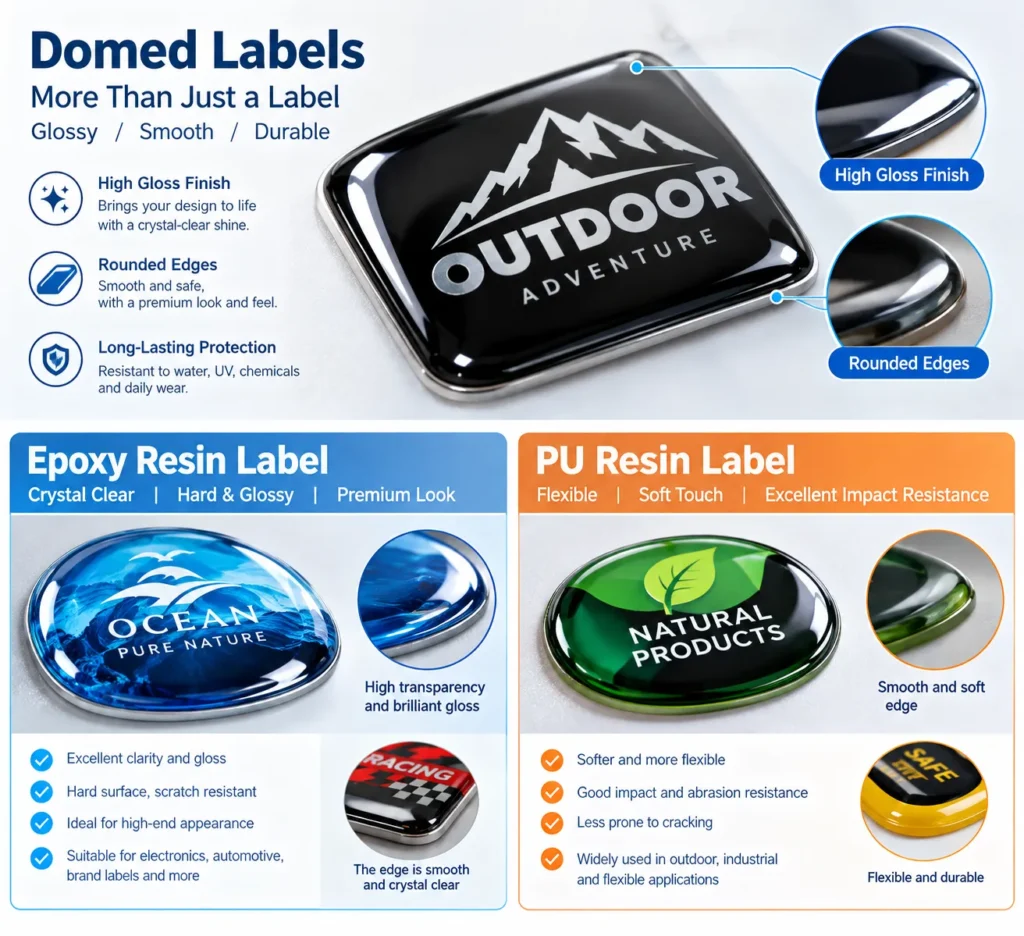
A domed label may look like a small detail on a product, but it can make a noticeable difference to the overall appearance. The clear, raised coating gives the printed design a glossy, three-dimensional effect while adding a layer of protection to the surface.
For manufacturers producing brand labels, promotional stickers, nameplates, and decorative badges, choosing the right doming resin is an important part of the production process.
Two materials are commonly considered for this application: epoxy resin and polyurethane (PU) resin. Both can produce an attractive domed finish, but they behave differently in terms of hardness, flexibility, weather resistance, and long-term performance.
So, which one should you choose for your labels? The answer depends on where the labels will be used and what properties matter most.
What Is Epoxy Doming Resin?
Epoxy doming resin is a two-component material consisting of resin and hardener. When the two components are mixed in the correct ratio, a chemical reaction takes place and the liquid gradually cures into a solid, transparent coating.
One reason epoxy resin is popular for domed labels is its ability to create a smooth, glossy surface. When the dispensing amount is properly controlled, the resin can spread across the label and form a rounded, lens-like finish.
After curing, the coating is generally hard and resistant to everyday scratches and handling. This makes it suitable for many indoor labeling applications where appearance and surface protection are important.
Epoxy doming resin is commonly used for:
- Logo stickers and brand labels
- Promotional products and corporate gifts
- Equipment nameplates
- Decorative badges and emblems
- Indoor product identification labels
Another advantage is its visual clarity. A well-formulated, properly cured epoxy resin can give printed graphics a rich, glossy appearance without significantly obscuring the design.
However, epoxy is not the best choice for every environment. Standard epoxy formulations may yellow after prolonged exposure to sunlight, and a hard coating can be less suitable for labels that need to bend or flex during use.
If the finished labels will be installed outdoors or exposed to frequent temperature changes, UV exposure, or repeated bending, these factors should be considered before selecting the material.
What Is PU Doming Resin?
PU doming resin, also known as polyurethane doming resin, is another two-component material used to create a transparent, raised coating on labels and graphics.
Compared with many conventional epoxy formulations, PU resin can offer greater flexibility and better resistance to yellowing when the appropriate formulation is selected. These characteristics make it worth considering for applications where labels may be exposed to sunlight, temperature fluctuations, or mechanical movement.
PU doming resin is often used for:
- Automotive emblems and interior labels
- Outdoor brand labels
- Flexible promotional labels
- Industrial identification stickers
- Labels used on products with curved surfaces
Its flexibility can help the cured coating accommodate some movement in the underlying label. This is particularly useful when the substrate is not completely rigid.
However, PU resin is not automatically superior to epoxy. Its performance depends on the specific formulation, curing conditions, substrate, and intended application. Some PU systems also require more careful moisture control during storage, mixing, and dispensing.
For manufacturers, the key is to select a PU resin designed for the actual working conditions rather than relying on the material name alone.
Epoxy vs PU Doming Resin: Key Differences
Although both materials can produce a clear, glossy dome, their practical differences can influence production quality and the service life of the finished label.
1. Appearance and Gloss
Epoxy resin is widely used when a hard, smooth, glass-like finish is the main priority. It works well for decorative labels, logos, and promotional products where the raised surface helps highlight the printed design.
PU resin can also produce a clear, attractive finish. The final appearance depends on the formulation, resin thickness, curing process, and compatibility with the printed substrate.
If your products are mainly indoor decorative labels, epoxy is often a practical starting point. For applications requiring greater flexibility or outdoor durability, a suitable PU formulation may be a better option.
2. Hardness and Flexibility
This is one of the most important differences to consider.
Epoxy doming resin generally cures into a relatively hard coating. That hardness can help protect the printed surface during normal handling, but it may also make the coating less tolerant of bending.
PU doming resin can be formulated to provide a more flexible finish. This makes it useful for labels applied to curved surfaces or products that experience some movement.
The actual hardness and flexibility vary by product, so it is always worth checking the manufacturer’s technical data sheet before making a decision.
3. UV Resistance and Yellowing
Yellowing is a common concern when clear resin coatings are exposed to sunlight over time.
Conventional epoxy resin may gradually yellow under prolonged UV exposure. This can affect the appearance of white backgrounds, light-colored graphics, and products intended to maintain a clean, premium look.
Some polyurethane formulations offer improved UV stability and color retention. However, not all PU resins have the same level of weather resistance, and the formulation must be suitable for the intended exposure.
For outdoor labels, compare the manufacturer’s UV and weathering test data rather than assuming that every PU product will outperform every epoxy product.
4. Scratch Resistance and Durability
Both epoxy and PU doming resin can protect printed labels against routine handling and surface wear.
A harder epoxy coating may be suitable for labels that need a rigid, glossy surface. A more flexible PU coating may be preferable when impact absorption or movement is a concern.
Scratch resistance is not determined by hardness alone. Resin formulation, curing quality, coating thickness, and the type of contact the label experiences all affect the final result.
For labels used on industrial equipment, vehicles, or frequently handled products, testing the finished label under realistic conditions is more useful than comparing resin types in isolation.
5. Curing and Production Requirements
The resin itself is only one part of the process. Mixing accuracy, dispensing consistency, temperature, and curing conditions also affect the finished label.
Both epoxy and PU doming systems require the correct mixing ratio and sufficient curing time. If the components are not mixed properly, the coating may remain soft, develop surface defects, or fail to achieve its intended properties.
PU systems may also be more sensitive to moisture, depending on their chemistry. Moisture contamination can cause defects in certain formulations, so storage and handling instructions should be followed carefully.
For manufacturers producing large quantities of labels, consistent metering and mixing can help reduce material waste and improve batch-to-batch quality.
Comparison Table: Epoxy vs PU Doming Resin
| Property | Epoxy Doming Resin | PU Doming Resin |
|---|---|---|
| Surface finish | Typically hard and glossy | Can be glossy, depending on formulation |
| Cured hardness | Generally higher in conventional systems | Available in a wider range of hardness levels |
| Flexibility | Usually more rigid | Often more flexible |
| UV resistance | Conventional grades may yellow over time | Some grades offer better UV stability |
| Scratch resistance | Often suitable for routine surface protection | Depends on hardness and formulation |
| Outdoor applications | Possible with a suitable formulation and protection | Often considered for improved weathering performance |
| Moisture sensitivity during processing | Depends on the product | Can be an important consideration |
| Typical applications | Indoor labels, logos, badges, gifts | Flexible labels, automotive applications, selected outdoor uses |
Note: This table describes general tendencies, not guaranteed properties. Always compare the technical data sheets of the specific resin systems you intend to use.
Which Doming Resin Is Better for Your Application?
The easiest way to choose between epoxy and PU resin is to start with the finished label rather than the resin itself.
Choose epoxy doming resin when:
- Your labels are mainly used indoors.
- A hard, glossy, raised finish is a priority.
- You manufacture logo stickers, decorative badges, or promotional gifts.
- The label substrate remains relatively rigid during use.
Consider PU doming resin when:
- The label needs to accommodate some bending or movement.
- The product may experience regular temperature changes.
- UV exposure and long-term color retention are important.
- The application requires a flexible coating or a formulation designed for outdoor service.
These are starting points rather than absolute rules. Some epoxy systems are developed for demanding applications, while some PU systems are intended primarily for indoor use. The resin’s documented performance should guide the final decision.
How to Get a Consistent Domed Finish
Even a suitable resin can produce disappointing results if the dispensing process is not properly controlled.
Several factors deserve attention during production.
Use the correct mixing ratio. Two-component resin systems must be mixed according to the manufacturer’s specified ratio, whether measured by weight or volume. The two methods are not interchangeable unless the manufacturer confirms that they are.
Control the dispensing volume. Too little resin may leave the label looking flat, while too much can cause overflow. The ideal dispensing volume depends on the label dimensions, surface tension, resin viscosity, and desired dome height.
Keep the material clean. Dust, air bubbles, and contamination can affect transparency and surface quality. Clean working conditions and appropriate bubble-control procedures help improve the finished appearance.
Maintain suitable curing conditions. Temperature and humidity can affect viscosity, flow, and curing behavior. Follow the recommended processing conditions for the selected resin.
Test the complete label construction. The adhesive, printed ink, label film, and resin all contribute to final performance. A small production trial can help identify compatibility issues before full-scale manufacturing.
For businesses producing domed labels in volume, a controlled dispensing process can make it easier to achieve consistent coating height, appearance, and material usage.
Can an Automatic Dispensing Machine Be Used for Both Epoxy and PU Resin?
In many cases, yes. However, compatibility depends on the machine configuration and the properties of the selected material.
An automatic epoxy dispensing machine or two-component adhesive dispensing system can help control the mixing ratio and dispensing quantity. For suitable resin formulations, this can improve production consistency and reduce errors associated with manual mixing and application.
Before selecting equipment, check the resin’s viscosity, mixing ratio, working time, curing requirements, and compatibility with the wetted parts of the machine. PU formulations may require additional attention to moisture control, while some resin systems may need temperature management or specialized mixing arrangements.
The production setup should also match the size and shape of the labels, required output, and desired dome height.
For manufacturers handling different resin types, confirming material compatibility with the equipment supplier before purchasing can prevent unnecessary adjustments later.
Final Thoughts
Epoxy and PU doming resin can both produce attractive, durable coatings for labels, but they serve somewhat different needs.
Epoxy is often a good choice for indoor labels that require a hard, glossy finish. PU is worth considering when flexibility, UV stability, or resistance to changing environmental conditions is more important.
There is no single resin that works best for every label. The right choice depends on the substrate, operating environment, required appearance, and performance specifications.
If you are unsure which material will work best, test a small batch of finished labels under the conditions they will experience in actual use. This is a practical way to compare appearance, adhesion, flexibility, and durability before moving into mass production.
Choosing the right resin and controlling the dispensing process together will help you achieve a more consistent domed finish and a product that better meets your customers’ expectations.
Our machine can handel both PU and Epoxy resin, so just send us your resin TDS and also your requirement, we will recommend suitabe machine for your reference
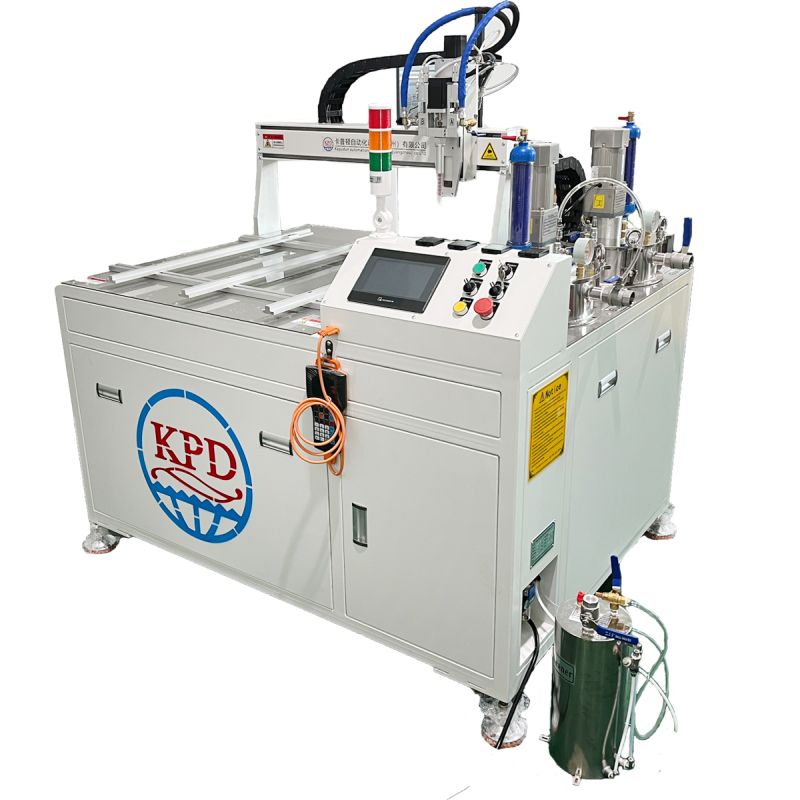
Our machine can handel both PU and Epoxy resin, so just send us your resin TDS and also your requirement, we will recommend suitabe machine for your reference