News
KPD Fully Automatic Two-Liquid Dispensing Machine Operation Precautions
Our fully automatic two-component adhesive dispensing machine is mainly used for precise metering and mixing of two-component adhesives. Common applications include: waterproof power supply dispensing, wall washer light body dispensing, rigid light strip dispensing, linear light dispensing, point light source dispensing, advertising module dispensing, battery dispensing, electrolytic capacitor dispensing, charging pile dispensing, aquarium pump dispensing, etc. Commonly used two-component adhesives include: two-component silicone, two-component epoxy resin, two-component PU adhesive, etc., with a ratio range between 1:1 and 10:1.
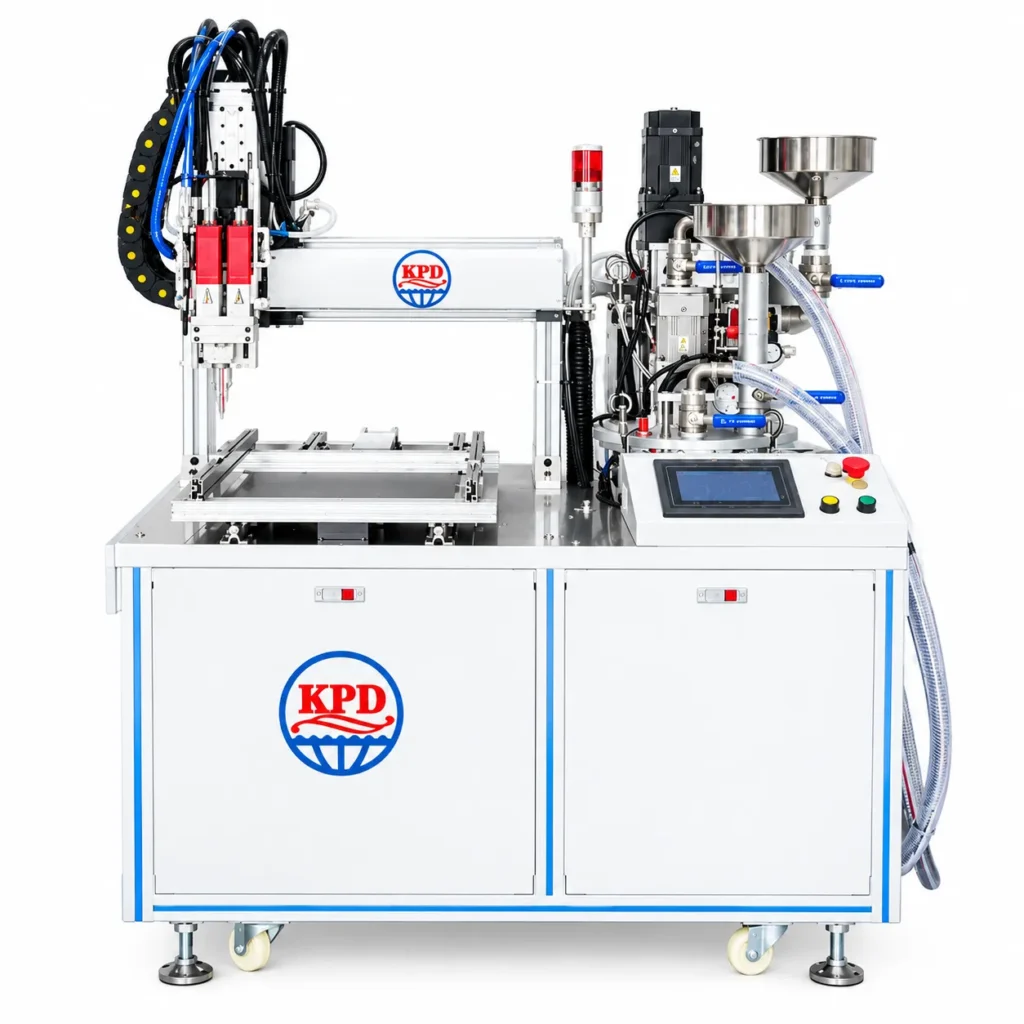
metering mixing dispensing machine
The KPD fully automatic two-component dispensing machine only requires the worker to pour the A and B components of the adhesive into two separate 30L glue tanks, adjust the mixing ratio, and conduct several dispensing and weighing tests to obtain the optimal ratio. The precise metering pump will dispense the corresponding amount of adhesive according to the set ratio. After setting the dispensing time, the dispensing volume can be adjusted. The product is fixed on the table, and the movement trajectory of the dispensing head is programmed to begin automatic dispensing.
The following points should be noted when using the dispensing machine:
1. After the machine arrives at the factory, please place it in a suitable workstation, ensure it is level, and properly installed. Carefully check the power cord, handheld programmer, accessory kit, fixtures, etc., for any missing parts. Connect the power and gas connections, and check that the electrical connections are normal and that the handheld programmer is working.
2. Check the A and B glue buckets for foreign matter. Pour glue into each bucket separately. During subsequent production, check the buckets for low material levels. Open the swivel valve on the bucket lid before filling. If there is sediment in the glue, turn on the mixing motor before filling to ensure thorough mixing.
3. Before batch filling, check the accuracy of the A/B glue dispensing volume and the AB glue mixing ratio (use the supplied electronic scale to measure the dispensing volume of A glue, B glue, and the total AB dispensing volume to ensure they match the set parameters). After testing, fill a small batch of products to observe the glue curing. If the glue cures normally, batch filling can continue.
4. When editing or starting the program, please calibrate the program starting point before starting the program.
5. During the glue filling process, constantly monitor for significant changes in the glue dispensing volume. If using a dynamic mixing tube, carefully observe whether the mixing blades are working properly.
6. After the equipment completes its phased operation, promptly remove the mixing tube for cleaning. Then, in manual mode, dispense a small amount of A/B adhesive separately, and wipe away any remaining A/B adhesive from the valve head with cleaning fluid. (If the adhesive crystallizes easily when exposed to air, seal the dispensing port of the adhesive valve with grease.)
7. When the equipment is not in operation, close the air vent valve on the A/B adhesive tank to isolate the adhesive from air, and disconnect the power and air supply.
8. Keep the machine table clean and tidy. Clean up any adhesive drips or residue promptly, paying particular attention to the moving guide rails for any adhesive residue, as this can affect machine operation.
9. Dispensing machines are usually customized according to the customer’s adhesive characteristics. If you need to use other adhesives, please contact KPD technicians to consult on feasibility to avoid machine damage or unnecessary losses due to improper operation.
If your product manufacturing requires two-component adhesives and you are troubled by frequent dispensing, dispensing accuracy, and dispensing efficiency issues, please contact KPD Automation for professional dispensing solutions!