News
Manual Glue Dispensing Machine: Features and Applications
In industries such as electronics manufacturing, automotive components, LED lighting, industrial assembly, and decorative products, glue dispensing is an essential production process. Adhesives are used not only for bonding but also for sealing, fixing, electrical insulation, waterproofing, and component protection.
For small-batch production, product development, and manufacturing environments involving multiple product types, manual glue dispensing machines are a practical solution thanks to their flexible operation, relatively low initial cost, and simple maintenance.
So, what are the main features of a manual glue dispensing machine? Which industries can benefit from it? And how does it compare with an automatic glue dispensing machine? This article explores its working principle, key advantages, applications, and selection criteria.
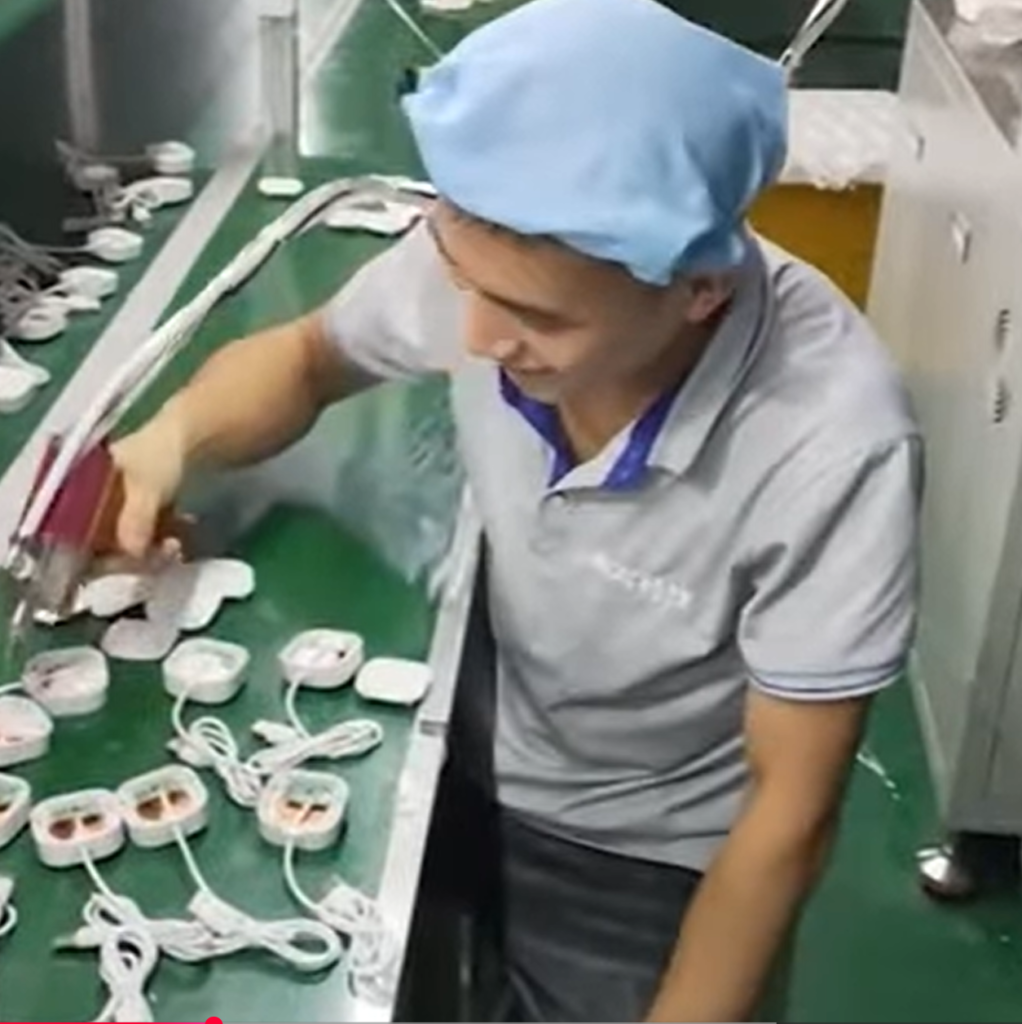
manual glue dispensing machine
1. What Is a Manual Glue Dispensing Machine?
A manual glue dispensing machine is a device used to apply adhesive, sealant, or other fluid materials to specific areas of a workpiece through manual operation.
A typical manual dispensing system consists of a controller, a pneumatic system, a syringe or adhesive supply container, a dispensing needle, and a foot pedal or manual control device. The operator positions the dispensing needle and controls the dispensing process according to the product’s requirements.
Depending on the supply method and material properties, manual dispensing equipment can be used with single-component adhesives. It may also be integrated with a suitable two-component metering and mixing system when the application requires two-part materials. Compatibility depends on the equipment configuration, adhesive viscosity, mixing ratio, and curing requirements.
2. What Are the Main Features of a Manual Glue Dispensing Machine?
2.1 Easy Operation and Simple Setup
One of the main advantages of a manual glue dispensing machine is its straightforward operation. Its simple structure and intuitive controls allow operators to learn the basic dispensing process with relatively little training.
Unlike complex automated systems, basic manual dispensing equipment generally does not require extensive programming or complicated motion-path configuration.
This makes it a practical choice for product sampling, prototype development, and initial process testing.
2.2 Relatively Low Initial Investment
Compared with advanced automatic dispensing equipment and robotic dispensing systems, basic manual glue dispensing machines generally require a lower initial investment.
Their installation and maintenance requirements are also relatively simple, making them suitable for businesses that need dispensing capabilities without investing in a complete automated production line.
For small manufacturers, startups, and companies with limited dispensing volumes, a manual system can provide a cost-effective starting point.
2.3 Flexible Operation for Multiple Product Types
Manual glue dispensing machines are particularly useful in production environments where product designs, sizes, and dispensing positions frequently change.
Operators can manually adjust the needle position, dispensing path, and operating speed according to the shape and requirements of each workpiece.
This flexibility makes manual dispensing suitable for small-batch manufacturing, customized products, and production lines handling multiple product models.
2.4 Suitable for Complex Shapes and Localized Dispensing
Some products have irregular surfaces, narrow spaces, corners, or specific areas that require adhesive application.
Manual dispensing allows operators to position the needle according to the shape of the workpiece and apply adhesive to targeted areas.
It is especially useful for repair work, sample preparation, laboratory testing, and applications that require visual judgment during the dispensing process.
2.5 Compact Structure and Convenient Maintenance
Basic manual dispensing equipment generally has a compact structure and requires relatively little installation space.
Routine maintenance typically involves checking the adhesive container, dispensing needle, tubing, connectors, and sealing components.
Proper cleaning and maintenance can help reduce common problems such as needle blockage, adhesive leakage, and unstable material flow.
2.6 Dispensing Quality Depends on Operator Skill
Although manual dispensing offers flexibility, the final result is influenced by the operator’s experience and consistency.
Factors such as needle height, dispensing speed, movement path, pressure settings, and dispensing time can affect adhesive volume and bead shape.
For production applications, it is advisable to establish standard operating procedures and define clear requirements for dispensing position, adhesive quantity, and quality inspection.
3. Applications of Manual Glue Dispensing Machines
3.1 Electronics and Electrical Manufacturing
In electronics manufacturing, manual glue dispensing machines can be used for component fixing, localized sealing, connector bonding, circuit board protection, and small sensor assembly.
The appropriate adhesive and dispensing method should be selected according to component sensitivity, electrical insulation requirements, material compatibility, and dispensing accuracy.
For sensitive electronic components, careful control of adhesive volume and application position is particularly important.
3.2 LED Lighting Industry
In LED lighting manufacturing, manual glue dispensing equipment can be used for localized bonding, sealing, structural fixing, and prototype production.
Typical applications include selected LED strips, lighting housings, and small lighting assemblies.
For long LED wall washer lights or products requiring continuous and uniform sealing, manufacturers should evaluate whether manual dispensing can meet the required quality and production rate. A semi-automatic or automatic dispensing solution may be more suitable for high-volume production.
3.3 Automotive Components
Automotive manufacturing involves adhesive bonding, sealing, vibration protection, and localized component protection.
Manual dispensing machines can support small automotive component assembly, prototype development, maintenance, and low-volume production.
For automotive electronics and other safety-critical applications, adhesive compatibility, curing conditions, sealing performance, and process validation should be carefully evaluated.
3.4 Crafts and Decorative Products
Manual glue dispensing machines are useful in the production of crafts, badges, nameplates, decorative labels, and other customized products.
They can support localized bonding, resin application, and small-batch manufacturing. Operators can adjust the dispensing position according to the product’s outline and appearance requirements.
For applications requiring a smooth, transparent, raised resin dome, manufacturers should also consider adhesive flow characteristics, bubble control, surface tension, and curing conditions.
3.5 Product Development and Laboratory Testing
During product development, manufacturing quantities are often limited, and adhesive formulations or process parameters may change frequently.
Manual dispensing equipment makes it easier to test different dispensing positions, adhesive volumes, and application methods without extensive automation setup.
It is therefore a practical choice for laboratories, engineering departments, prototype production, and process development.
4. Manual Glue Dispensing Machine vs. Automatic Glue Dispensing Machine
Manual and automatic glue dispensing machines serve different production needs. The right choice depends on output volume, accuracy requirements, product complexity, and manufacturing objectives.
| Comparison | Manual Glue Dispensing Machine | Automatic Glue Dispensing Machine |
|---|---|---|
| Operation | Manually controlled | Program-controlled |
| Initial investment | Generally lower | Generally higher |
| Flexibility | Excellent for changing products | Excellent for repeatable programmed tasks |
| Dispensing consistency | Depends heavily on operator technique | More consistent under stable process conditions |
| Production efficiency | Depends on operator speed | Suitable for repetitive, higher-volume production |
| Programming | Usually minimal | May require programming and process setup |
| Typical applications | Prototypes, repairs, and small batches | Precision dispensing and repetitive production |
Automatic dispensing does not automatically guarantee high precision. Actual performance also depends on the adhesive supply system, metering method, motion platform, material characteristics, and process parameters.
For businesses with stable, repetitive dispensing requirements, automation can improve production consistency and reduce dependence on manual operation.
5. How to Choose the Right Manual Glue Dispensing Machine
Selecting the right equipment requires more than comparing purchase prices. The following factors should be considered.
5.1 Identify the Adhesive Type
Different adhesives have different viscosities, chemical properties, curing methods, and storage requirements.
Before selecting a machine, confirm that the wetted components, tubing, seals, and dispensing needle are compatible with the adhesive.
5.2 Determine the Required Dispensing Volume and Accuracy
For applications involving small adhesive dots or narrow dispensing paths, pay attention to dispensing control, repeatability, and needle specifications.
For applications requiring larger adhesive volumes or continuous beads, consider the material supply capacity and the stability of continuous dispensing.
5.3 Consider Adhesive Viscosity
Low-viscosity and high-viscosity adhesives require different dispensing configurations.
High-viscosity materials may require an appropriate pressure supply, larger dispensing needles, or a specialized material delivery system.
Testing the actual adhesive under representative production conditions is recommended before finalizing the equipment configuration.
5.4 Check Whether Single- or Two-Component Adhesive Is Required
Single-component adhesives generally do not require on-machine mixing.
Two-component adhesives, such as epoxy and polyurethane, require accurate metering and suitable mixing to achieve the intended material properties. The equipment must be selected according to the required mixing ratio, working life, dispensing volume, and mixing method.
Not every basic manual glue dispensing machine can process two-component adhesives. A dedicated metering and mixing system may be necessary.
5.5 Evaluate Production Volume and Future Requirements
Manual dispensing is often a good choice for prototyping, repair work, and small-batch production.
If production volume increases or the same dispensing path must be repeated throughout the day, a semi-automatic or fully automatic dispensing machine may offer better productivity and process consistency.
Considering future production requirements can help businesses avoid unnecessary equipment replacement.
6. How to Improve Manual Glue Dispensing Quality
Consistent dispensing quality requires suitable equipment, stable materials, and standardized operating procedures.
The following practices can help improve results:
- Maintain stable adhesive conditions: Store and use adhesives according to the manufacturer’s recommendations. Avoid expired or contaminated materials.
- Standardize operating methods: Keep needle height, dispensing time, movement speed, and operating sequence as consistent as possible.
- Select the correct needle: Choose the needle diameter according to adhesive viscosity, required volume, and target application area.
- Inspect the equipment regularly: Check tubing, connectors, seals, and needles for leakage, blockage, or wear.
- Establish quality inspection standards: Inspect dot size, bead continuity, coverage, air bubbles, and curing condition according to product requirements.
- Test before mass production: Conduct dispensing trials with the actual adhesive and workpiece to confirm that the selected settings meet production requirements.
For applications with strict adhesive volume requirements or demanding appearance, sealing, and electrical performance standards, process validation is especially important.
7. Conclusion
Manual glue dispensing machines offer several advantages, including simple operation, relatively low initial investment, flexible application, and convenient maintenance.
They are particularly suitable for product development, laboratory testing, repair work, customized manufacturing, and small-batch production across electronics, LED lighting, automotive components, and decorative product industries.
However, dispensing quality and productivity can be affected by operator skill. For high-volume manufacturing, repetitive precision dispensing, or applications requiring accurate metering and mixing of two-component adhesives, semi-automatic or fully automatic dispensing systems may be a better choice.
When selecting dispensing equipment, manufacturers should evaluate adhesive type, viscosity, dispensing accuracy, production volume, product quality requirements, and long-term operating costs.
Choosing the right glue dispensing solution can help improve manufacturing efficiency, reduce material waste, and establish a more stable and reliable production process.