News
A Complete Guide to Meter Mix Dispensing Equipment for Industrial Buyers
If your production line depends on two-part adhesives, sealants, resins, or silicones, the way you mix and dispense those materials can make or break both product quality and throughput. Manual mixing is slow, inconsistent, and wasteful. That is where meter mix dispensing equipment comes in.
These systems are engineered to meter two (or more) components at a precise ratio, mix them thoroughly, and dispense the result exactly where and when you need it. Whether you are bonding electronic components, potting sensors, sealing automotive modules, or casting polyurethane parts, the right meter mix dispenser keeps your process repeatable, your scrap rate low, and your operators safe.
This guide walks through how meter mix dispensing equipment works, the advantages it delivers, the industries that rely on it, and what to consider when selecting a system for your facility.
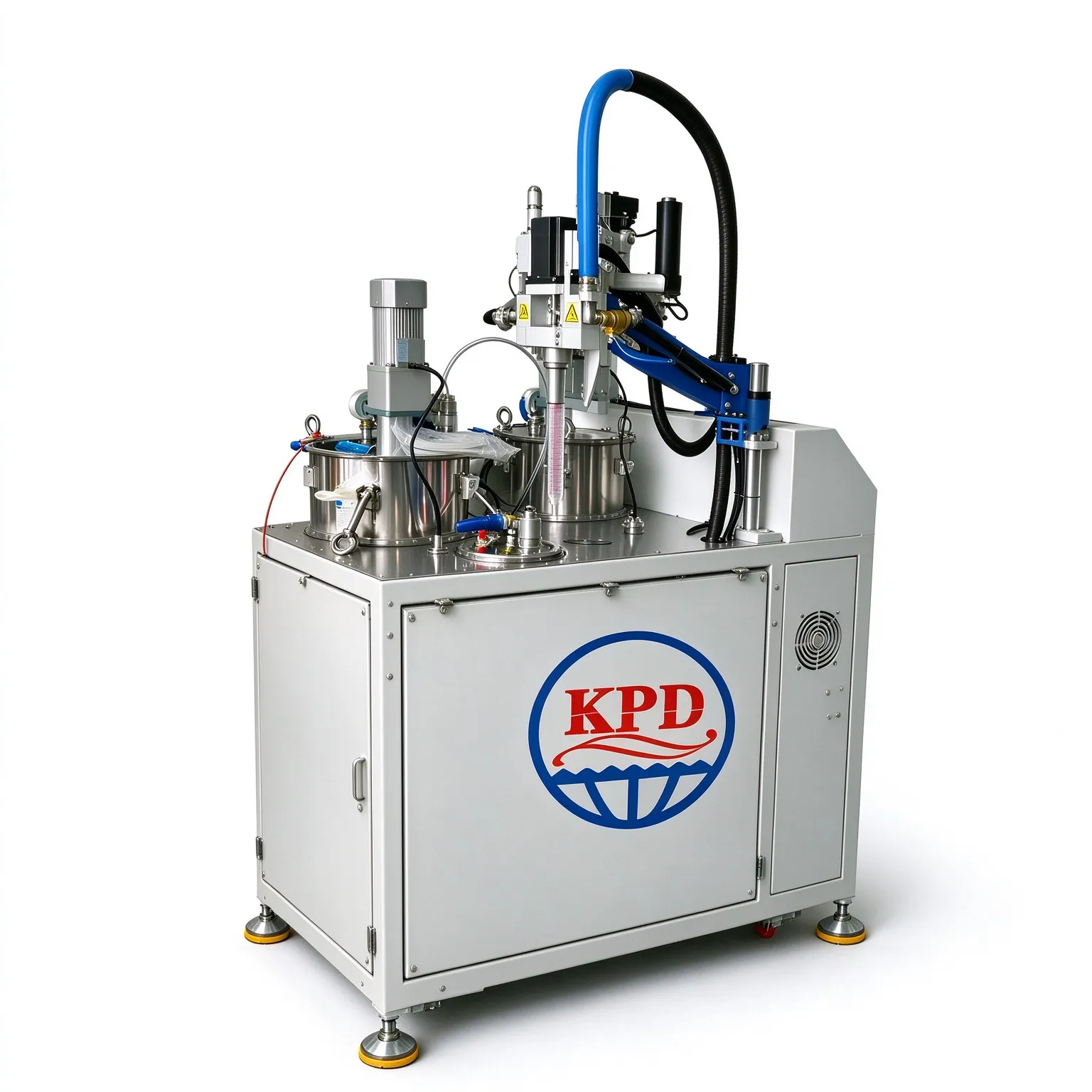
Portable Arm 2K Epoxy Meter Mix Dispense System
How Meter Mix Dispensing Equipment Works
At its core, every meter mix dispensing system performs three sequential operations: metering, mixing, and dispensing. Each stage is critical to achieving a consistent, bubble-free, accurately ratioed output.
1. Metering
The system draws the two base components — typically referred to as Part A (resin) and Part B (hardener or catalyst) — from separate supply containers. Positive-displacement pumps or metering cylinders measure each component in the exact ratio specified by the material manufacturer. Depending on the machine design, metering can be accomplished through:
- Gear pumps — ideal for low- to medium-viscosity materials and continuous-flow applications.
- Piston pumps — better suited for high-viscosity pastes or abrasive-filled materials.
- Progressive cavity pumps — used when the material contains fillers that would damage conventional pump internals.
The metering ratio must remain constant regardless of changes in material viscosity caused by temperature shifts or container levels. High-quality meter mix equipment holds the ratio within tight tolerances — often ±1 % or better — throughout the entire shot or continuous run.
2. Mixing
Once metered, the two components converge in a static mixer or a dynamic mixer.
- Static mixers contain a series of fixed internal elements that split, rotate, and recombine the material streams as they pass through. They have no moving parts, are inexpensive, and are disposable — making them the most common choice for many applications.
- Dynamic mixers use a motor-driven rotor to blend the components. They are preferred for fast-curing materials, high-viscosity compounds, or applications where a static mixer alone cannot achieve a homogenous blend.
The mixing chamber is designed to minimize air entrainment, because trapped bubbles are one of the leading causes of defects in potted and cast parts.
3. Dispensing
After mixing, the material is delivered to the dispense point through a nozzle or valve. Dispense parameters — flow rate, shot size, and pattern — are controlled electronically so that every part receives the same volume of material in the same location. For reactive materials that cure quickly, the system may incorporate a valve-purge or snuff-back function to prevent material from curing in the nozzle between shots.
Many modern meter mix dispensing systems also include material-level sensors, pressure monitoring, and automatic shutdown logic that stops the machine if the ratio drifts or a supply runs low, protecting both the equipment and the parts in process.
Key Advantages of Meter Mix Dispensing Equipment
Switching from manual or semi-manual processes to a dedicated meter mix system delivers measurable improvements across several areas.
Consistent Quality and Repeatability
The single greatest benefit is process repeatability. Because the metering ratio and mix quality are controlled mechanically, every dispense is essentially identical to the one before it. This consistency translates directly into fewer rejected parts, tighter quality control, and the ability to meet demanding industry specifications
Reduced Material Waste
Manual mixing almost always involves leftover material that cures in the cup or pot before it can be used. Meter mix dispensers only mix what is needed, when it is needed. For expensive two-part silicones, epoxies, or polyurethanes, the material savings alone can pay for the equipment in a surprisingly short period.
Higher Throughput
A meter mix system dispenses faster and more consistently than a human operator. Automated or semi-automated dispense cycles keep the line moving, reduce cycle times, and free up operators for higher-value tasks.
Improved Worker Safety
Many two-part materials contain sensitizers, solvents, or isocyanates that pose health risks with repeated skin or inhalation exposure. Enclosed metering and mixing reduce operator contact with raw chemicals, contributing to a safer workplace and easier compliance with OSHA and REACH regulations.
Support for Automation
Most meter mix dispensing equipment can be integrated with robotic arms, conveyor lines, and PLC-controlled production cells. This scalability means the same dispensing platform can grow with your production requirements.
Industries That Rely on Meter Mix Dispensing Equipment
Meter mix technology spans a broad range of sectors. Some of the most common include:
- Electronics Manufacturing — Potting and encapsulating printed circuit boards, sensors, and LED modules to protect them from moisture, vibration, and thermal cycling.
- Automotive — Gasketing, structural bonding, seam sealing, and potting of control units and battery packs for electric vehicles.
- Aerospace — Composite bonding, potting of avionics, and sealing of fasteners where failure is not an option.
- Medical Devices — Assembling catheters, potting sensors, and bonding housings with biocompatible adhesives in cleanroom environments.
- Renewable Energy — Encapsulating solar junction boxes and potting wind turbine components to withstand decades of environmental exposure.
- Construction and Industrial Assembly — Bonding panels, sealing joints, and casting polyurethane components for machinery.
In each of these sectors, the common thread is the need for precise, repeatable mixing and dispensing of reactive two-part materials — exactly what meter mix equipment is designed to provide.
How to Choose the Right Meter Mix Dispensing Equipment
Selecting a system is not just about picking the largest or most feature-rich model. The right choice depends on your materials, your production volume, and your integration plans. Here are the key factors to evaluate.
1. Material Properties
Start with the materials you will be dispensing. Document the following for each:
- Mix ratio (by volume or weight)
- Viscosity of each component
- Pot life — the working time before the mixed material begins to cure
- Filler content — abrasive fillers can quickly wear standard pump components
- Sensitivity to moisture or air
These parameters directly determine which pump type, mixer style, and wetted-material construction your system needs.
2. Shot Size and Flow Rate
Calculate the required shot volume and dispense rate for your application. A system sized for potting a 2-gram sensor is very different from one filling a 5-liter transformer. Always choose equipment with some headroom above your maximum requirement — running a pump at the top of its range every cycle shortens its life.
3. Ratio Tolerance
If your material manufacturer specifies a ratio of 2:1 with a tolerance of ±2 %, confirm the equipment can hold that accuracy under real production conditions, including viscosity changes as material containers empty and temperatures shift.
4. Integration and Automation Needs
Will the dispenser be operated manually, or will it be integrated with a robot, rotary table, or conveyor? Check for compatible control interfaces — digital I/O, Ethernet/IP, or PROFINET — and confirm the manufacturer offers integration support.
5. Maintenance and Support
Metering pumps and mixers are wear components. Evaluate the availability and cost of spare parts, the ease of routine maintenance, and the level of technical support the supplier provides in your region. Downtime on a dispensing line can halt an entire production cell, so responsive service matters.
6. Budget and Total Cost of Ownership
Look beyond the purchase price. Factor in consumable static mixers, spare pump seals, material savings from reduced waste, and expected service intervals. A slightly more expensive system with lower consumable costs and better reliability is often the better long-term investment.
Ready to Specify Your Meter Mix Dispensing System?
Choosing the right meter mix dispensing equipment is a decision that affects product quality, production efficiency, and operating costs for years to come. By understanding your material requirements, production volumes, and automation goals, you can narrow the field to systems that will perform reliably in your environment.
Talk to our application engineers today. Send us your material data sheets and production requirements, and we will help you identify the meter mix dispensing solution that fits your process, your budget, and your growth plans. Contact us now for a personalized recommendation and a no-obligation system quote.