News
Glue Dispensing Machine Manufacturer: How Does a Glue Dispensing Machine Work?
In today’s domestic market, where automated equipment is widely used, glue dispensing machines are commonly applied in industries that require precise fluid control, including adhesive dispensing, potting, encapsulation, and other bonding processes.
So, how does a glue dispensing machine work? Today, KPD Automation Equipment Co., Ltd. will explain the basic working principle.
Although many types of glue dispensing machines are available on the market, their fundamental operating principles are generally similar. Most systems use compressed air to control the opening and closing of the dispensing valve, while pumps deliver the adhesive from storage tanks to the metering, mixing, and dispensing sections.
This explanation may sound a little complicated at first. To make it easier to understand, let’s take a look at the working principle diagram provided by the glue dispensing machine manufacturer.
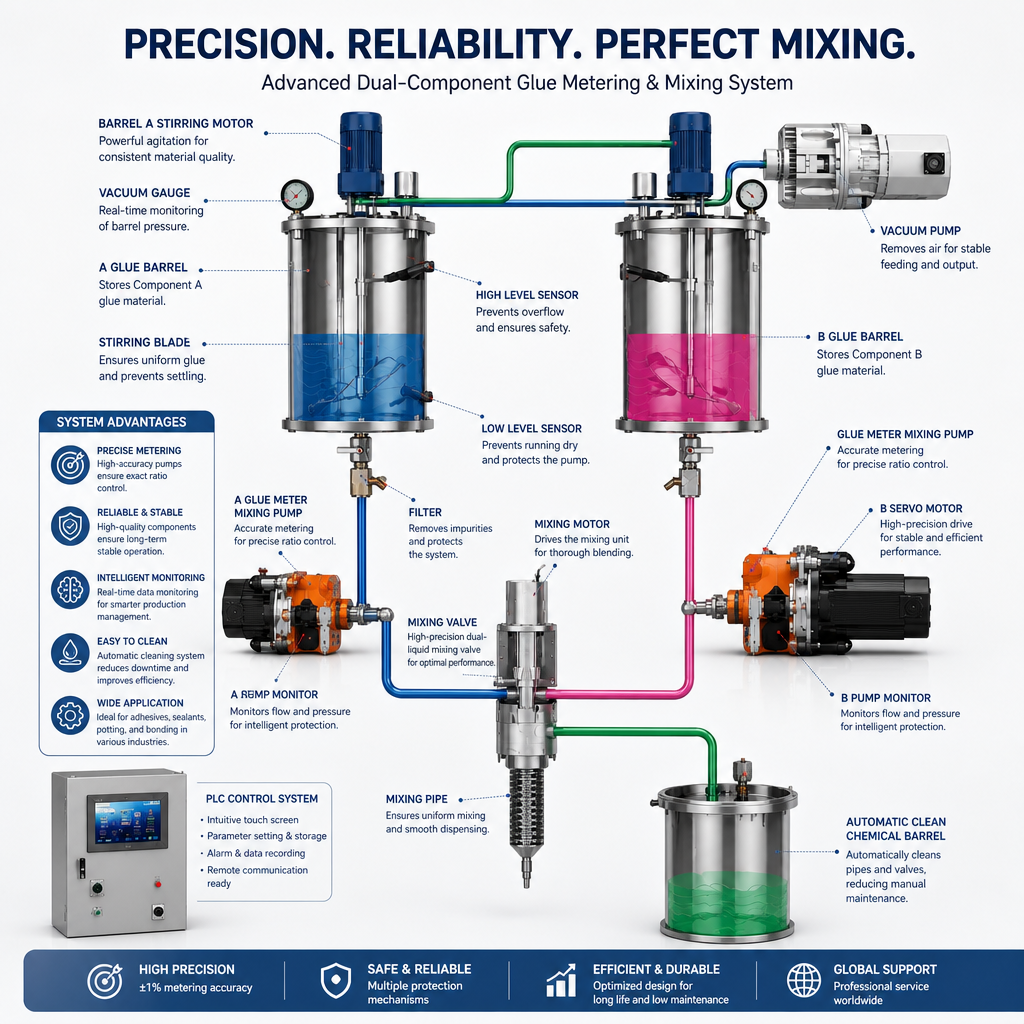
The A and B material tanks are used to store adhesive. The A&B metering pumps measure the adhesive, controlling both the mixing ratio and dispensing volume. The valve assembly is responsible for mixing the adhesive. Since the A and B components remain separated before entering the valve, cleaning work is only required for the valve and static mixing tube.
The two core components of a potting machine are the pump and valve. The valve controls adhesive on/off, while the pump handles metering and material delivery. Two-component adhesives are stored separately in Tank A and Tank B. To meet diverse industrial requirements, the material tanks can be customized with heating, stirring and vacuuming functions. Depending on adhesive viscosity, the glue flows out from the tank or is extracted, and delivered at a constant volume.
A and B glues are controlled independently and transported under power to the front dispensing section. The dispensing head is connected to a pneumatically controlled valve to turn glue flow on and off. A mixing tube is mounted below the valve to blend the A and B components. The mixing type is selected according to actual glue viscosity:
- If the glue has poor gravity flow or a large mixing ratio difference, dynamic mixing is adopted. A stirring motor drives the spiral shaft inside the mixing tube to achieve uniform blending for the two-component potting machine.
- If the glue features good fluidity and a similar A/B mixing ratio, static mixing can be used.
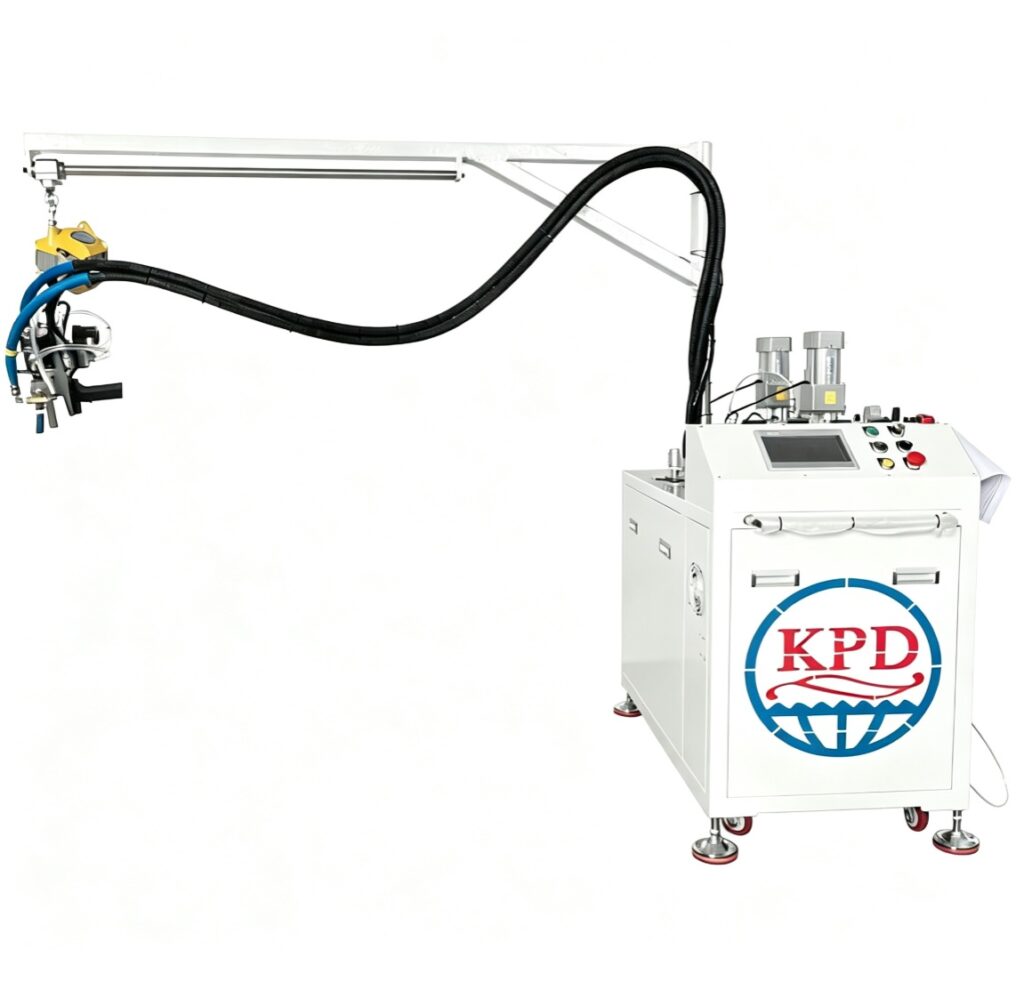
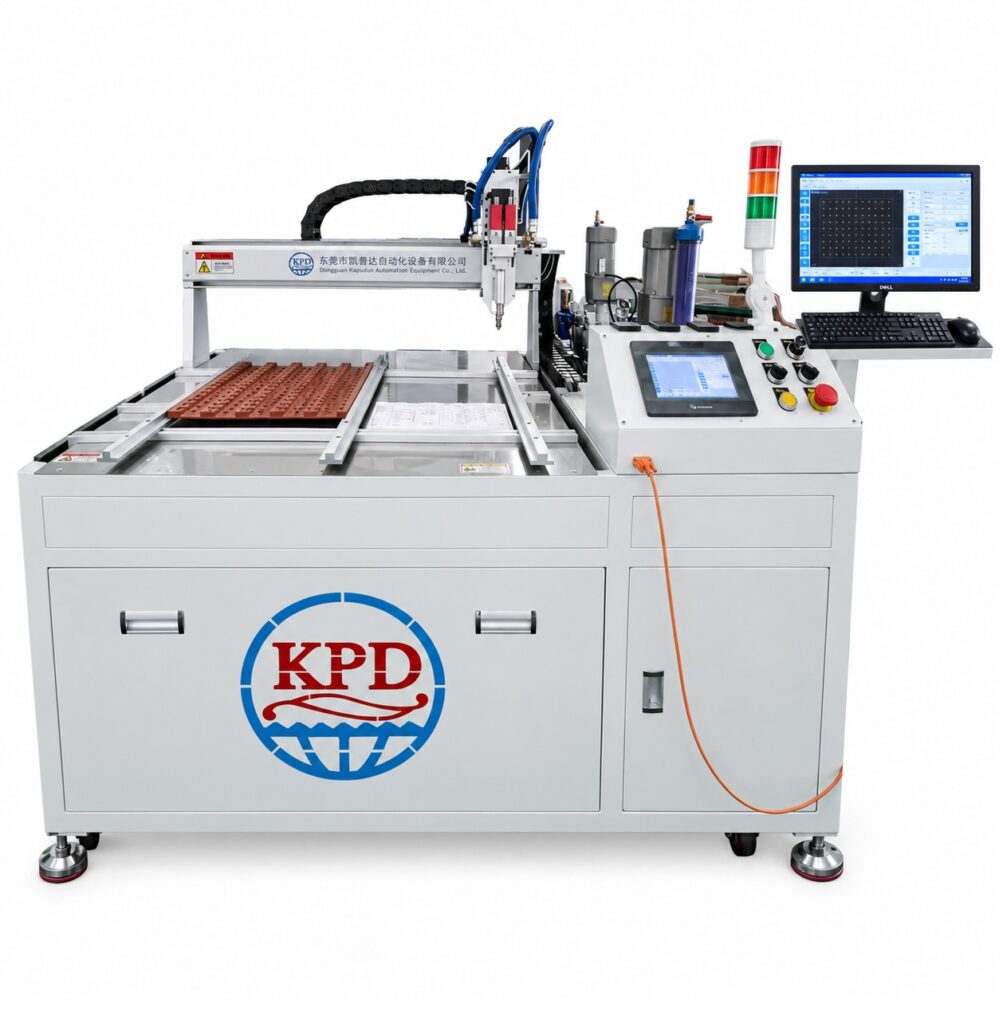
The dispensing head is mounted on a 3-axis motion platform. Controlled by computer programming, it automatically performs dispensing operations at different positions within 3D space. Most potting machines on the market follow this working principle. Equipment configurations vary slightly to adapt to different adhesive viscosities and potting processes. In recent years, with the maturity of domestic potting technology, automated potting equipment has achieved rapid improvements in precision and efficiency, powering industrial upgrading for manufacturers.
Advantages vs. Traditional Manual Potting
- Manual potting causes substantial adhesive waste.
- Manual potting is low in efficiency and difficult to manage.
- Unstable potting quality. Manual operation frequently leads to uneven glue dosage and incorrect mixing ratios.
- Severe waste of potting consumables in manual operations.
- Difficult recruitment and management of workers.
- Manual potting tends to spill glue around the workshop, making 6S management hard to implement and leaving a poor impression on customers.
More about machine details please contact by whatsapp+86 134 2516 4065 Email: [email protected]