News
Epoxy Potting Machine for Industrial Pressure and Temperature Sensors
Introduction
Industrial pressure and temperature sensors play a vital role in process automation, industrial equipment, automotive systems, energy management, and environmental monitoring. These sensors often operate under demanding conditions where moisture, vibration, dust, and temperature fluctuations can affect the reliability of sensitive electronic components.
An epoxy potting machine for industrial pressure and temperature sensors helps manufacturers apply protective resin accurately and consistently. By controlling material metering, mixing, and dispensing, the equipment supports reliable encapsulation processes and helps improve production repeatability.
For sensor manufacturers seeking stable product quality and efficient production, an automated epoxy dispensing and potting solution can be an important part of the manufacturing process.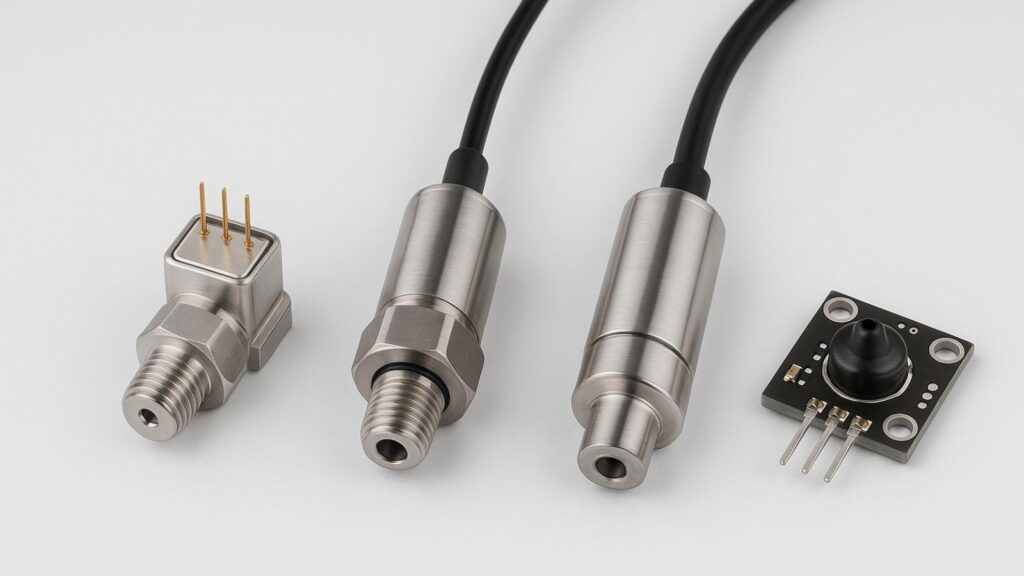
Why Is Epoxy Potting Important for Industrial Sensors?
Industrial sensors may contain delicate circuit boards, signal-processing components, electrical connections, and other sensitive elements. Appropriate encapsulation helps protect these components from environmental exposure and mechanical stress.
Depending on the selected epoxy formulation and sensor design, epoxy potting can provide several benefits:
- Moisture protection: Helps reduce moisture exposure to encapsulated electronic components.
- Electrical insulation: Supports electrical insulation requirements when the compound is appropriately selected.
- Mechanical protection: Helps secure components and protect them from selected vibration and mechanical stresses.
- Chemical resistance: Certain epoxy formulations provide resistance to specified oils, chemicals, and industrial fluids.
- Production consistency: Controlled resin dispensing helps achieve repeatable filling and encapsulation results.
The actual protection level depends on the epoxy properties, housing design, curing conditions, and manufacturing process.
How Does an Epoxy Potting Machine Work?
An industrial epoxy potting machine typically integrates material storage, precision metering, mixing, and dispensing into one coordinated system.
For two-component epoxy compounds, the process generally includes the following stages.
1. Material Preparation
Components A and B are stored in separate material tanks. Depending on the epoxy formulation, the system may require temperature control, agitation, moisture management, or other material-handling features.
The material supplier’s recommendations should be followed to maintain suitable viscosity and processing conditions.
2. Precision Metering
The machine delivers the two components according to the specified mixing ratio. Appropriate metering equipment helps maintain consistent material proportions and dispensing volume.
The required ratio and metering accuracy depend on the selected epoxy system and the sensor manufacturer’s process specifications.
3. Mixing
The two components are combined through a suitable static or dynamic mixing system. Proper mixing is essential for achieving the intended curing characteristics of the epoxy compound.
Mixing equipment should be selected according to material viscosity, working time, flow rate, and filler content.
4. Controlled Dispensing
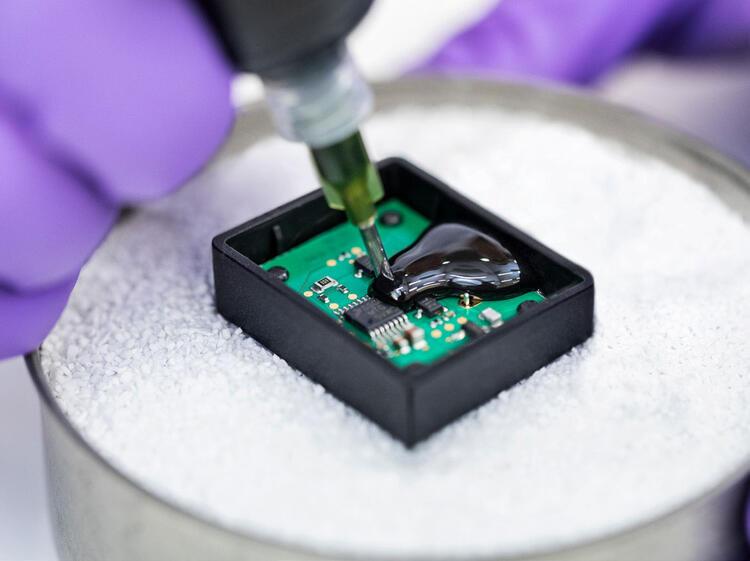
The mixed epoxy resin is dispensed into the designated cavity or housing of the pressure or temperature sensor.
Programmable dispensing parameters can help control shot volume, dispensing position, and material distribution. Depending on the product design, fixtures or automated positioning systems may also be integrated.
5. Curing and Inspection
After dispensing, the encapsulated sensor undergoes curing according to the resin manufacturer’s instructions. The finished product can then be inspected for filling quality, trapped air, curing condition, and other application-specific requirements.
Applications for Pressure and Temperature Sensor Potting
Industrial Pressure Sensors
Pressure sensors are widely used in hydraulic systems, pneumatic equipment, pumps, compressors, and industrial process control. Epoxy potting can protect selected electronic assemblies and electrical connections inside compatible sensor housings.
The dispensing process must be designed carefully to avoid blocking pressure ports, sensing diaphragms, or other functional structures.
Industrial Temperature Sensors
Temperature sensors are used in manufacturing equipment, HVAC systems, energy systems, and process monitoring. Potting compounds can protect designated electronic sections and electrical connections where appropriate.
Material selection is especially important when the finished sensor must withstand thermal cycling or operate at elevated temperatures. The chosen epoxy must meet the application’s temperature and mechanical requirements.
Automotive and Equipment Monitoring Sensors
Certain automotive and industrial monitoring sensors require encapsulation to protect electronic components from environmental exposure and vibration. An automated epoxy dispensing system can support repeatable production across different sensor models.
The final material and process should be validated against the sensor’s operating environment and applicable industry requirements.
Key Features to Consider When Selecting an Epoxy Potting Machine
Choosing the right sensor potting equipment requires more than comparing machine size or dispensing speed. Manufacturers should evaluate the complete material and production process.
Two-Component Metering and Mixing: For two-part epoxy systems, the machine should support the required A ratio and provide a mixing solution suitable for the selected compound.
Dispensing Volume Control: The equipment should accommodate the required resin volume, cavity dimensions, and acceptable filling variation.
Material Compatibility: Pump, valve, hose, seal, and mixing components must be compatible with the resin and hardener.
Bubble Management: Some applications benefit from vacuum degassing or other air-control measures. The need for degassing depends on the resin formulation and the sensor’s quality requirements.
Programmable Operation: Recipe storage and adjustable dispensing parameters can help manufacturers manage different sensor models and production requirements.
Production Integration: Depending on throughput requirements, the system may be integrated with fixtures, conveyors, robotic positioning, or automated inspection.
Cleaning and Maintenance: Consider material purging, mixing tube replacement, valve cleaning, and the working time of the mixed epoxy.
How to Improve Epoxy Potting Quality for Sensors
Consistent encapsulation depends on both the dispensing equipment and the process parameters.
First, confirm that the epoxy mixing ratio matches the material manufacturer’s specifications. Incorrect proportions may affect curing and final mechanical or electrical properties.
Second, maintain suitable material temperature and viscosity. These factors influence flow behavior, filling performance, and the ability of the resin to reach narrow cavities.
Third, optimize dispensing speed and shot volume to reduce overfilling and uneven material distribution.
Fourth, assess whether trapped air is a concern. Vacuum degassing, suitable dispensing strategies, and appropriate material handling may help reduce bubbles when compatible with the selected compound.
Finally, validate the curing process and inspect representative finished sensors before moving to mass production.
Customized Epoxy Potting Solutions for Sensor Manufacturers
Different pressure and temperature sensors have different housing dimensions, internal structures, resin volumes, and production targets. A customized epoxy potting machine can be configured according to these requirements.
Depending on the application, the solution may include precision metering pumps, static mixing tubes, programmable dispensing valves, vacuum degassing, automated positioning, or multiple dispensing stations.
To recommend a suitable system, manufacturers should provide the following information:
- Sensor samples or housing drawings
- Epoxy resin type and technical data sheet
- Required A mixing ratio
- Approximate dispensing volume per sensor
- Material viscosity and working time
- Target production capacity
- Required automation level and process constraints
Testing with the actual resin and representative sensor housings is recommended before finalizing the equipment configuration.
Conclusion
An epoxy potting machine for industrial pressure and temperature sensors helps manufacturers establish a controlled and repeatable resin encapsulation process. With suitable metering, mixing, and dispensing technology, the system can support consistent filling and the protection of designated electronic components.
Selecting the right equipment requires careful consideration of epoxy properties, sensor design, dispensing volume, curing requirements, and production capacity.
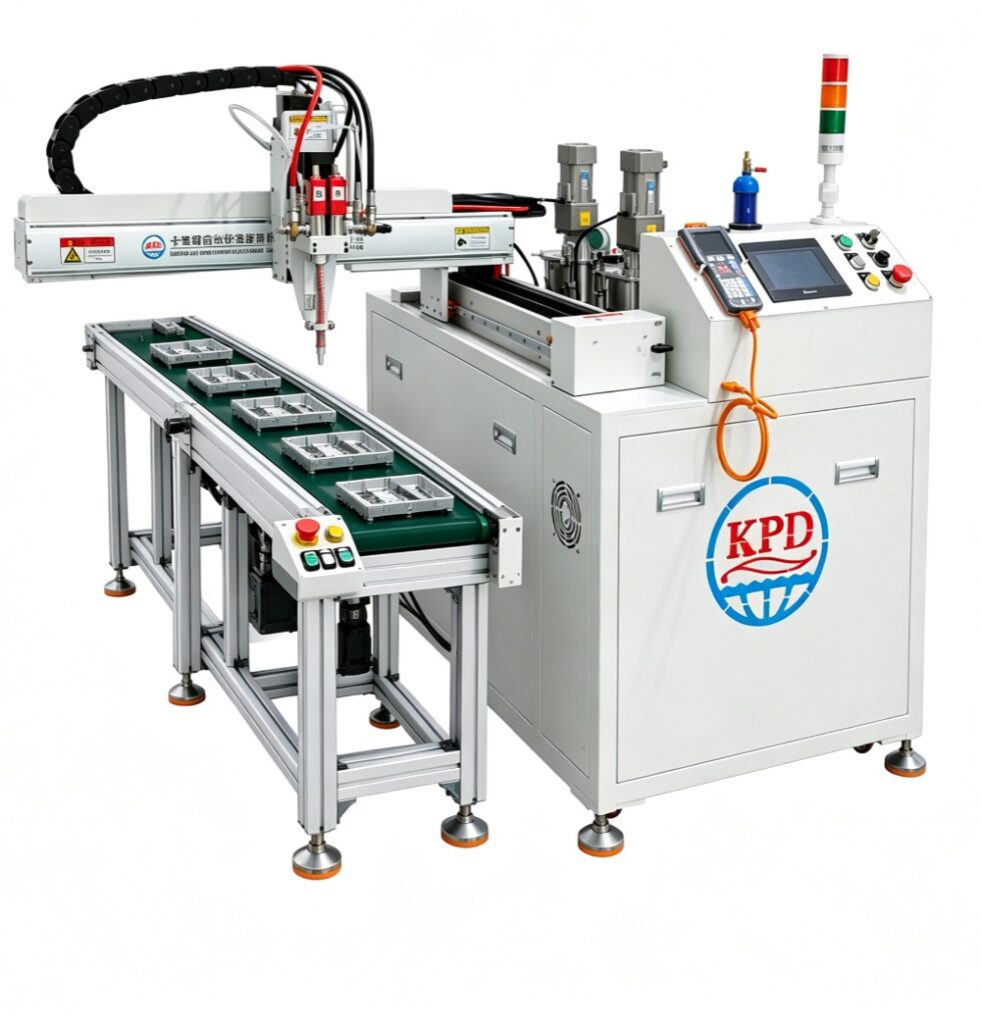
Looking for an epoxy potting machine for your pressure or temperature sensor production line? Contact our team with your resin specifications and sensor requirements to discuss a suitable dispensing solution.