Video Center
Two component glue dispensing machine working video for TPMS sensor potting and encapsulation
Two-Component Glue Dispensing Machine for TPMS Sensor Potting and Encapsulation
Watch how a two-component glue dispensing machine is used for TPMS (Tire Pressure Monitoring System) sensor potting and encapsulation. The dispensing process applies two-component potting materials to sensor assemblies to help protect sensitive electronic components against moisture, vibration, dust, and other environmental influences, depending on the selected material.
KPD provides automated two-component dispensing solutions for electronic potting and encapsulation applications. The system can be configured according to the adhesive type, mixing ratio, dispensing volume, sensor structure, and production requirements.
Looking for a reliable solution for TPMS sensor potting? Contact KPD to discuss your application and customized dispensing requirements.
Tire Pressure Monitoring Systems (TPMS) play an important role in vehicle safety by monitoring tire pressure and, in many systems, temperature. Their sensor assemblies contain sensitive electronic components that may require protection against moisture, vibration, temperature changes, and other demanding operating conditions.
Potting and encapsulation are widely used in electronics manufacturing to protect components and improve the durability of electronic assemblies. A suitable two-component adhesive dispensing system helps manufacturers apply epoxy, polyurethane (PU), silicone, or other compatible potting materials according to the requirements of the sensor design.
KPD’s two-component glue dispensing solutions are designed to support accurate metering, controlled mixing, and repeatable dispensing for sensor potting applications.
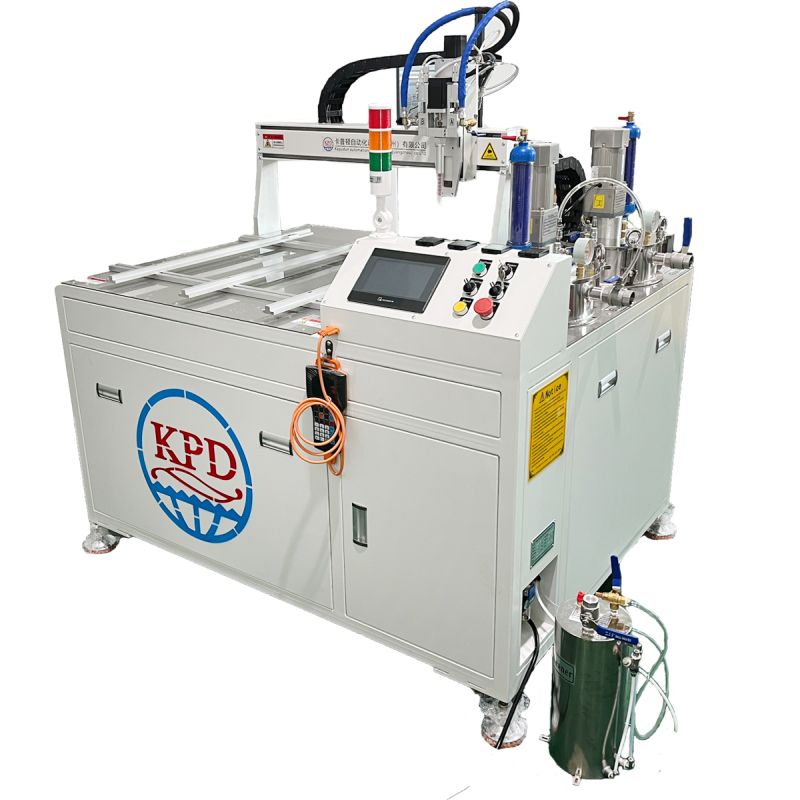
glue potting machine
Why Is Potting Important for TPMS Sensors?
1. Environmental Protection
Suitable potting compounds can help protect electronic components from moisture, dust, and environmental exposure. Actual protection depends on the material properties and the final assembly design.
2. Vibration Resistance
Automotive sensor assemblies may experience continuous vibration and mechanical shock. Selecting a potting compound with appropriate mechanical properties can help support component stability.
3. Electrical Insulation
Depending on the material formulation, potting compounds can provide electrical insulation around sensitive electronic components and circuit assemblies.
4. Improved Product Reliability
A properly designed potting process helps achieve consistent material coverage and reduce process variation, supporting reliable manufacturing quality.
Why Use a Two-Component Glue Dispensing Machine?
TPMS sensor potting may require two materials to be mixed at a specific ratio before application. Manual preparation can introduce inconsistencies in mixing, material quantity, and application.
An automated two-component dispensing system can help improve process repeatability and production efficiency.
Key benefits include:
- Accurate metering: Controls the delivery of the A and B components according to the specified mixing ratio.
- Consistent mixing: Uses a suitable mixing method to achieve a uniform mixture before dispensing.
- Controlled dispensing: Helps deliver the required amount of potting compound to each sensor assembly.
- Reduced manual handling: Supports a more standardized production workflow.
- Flexible configuration: Can be adapted to different sensor sizes, potting materials, and production requirements.
Actual dispensing accuracy, mixing performance, and production capacity depend on the equipment configuration and material characteristics.
TPMS Sensor Potting Process
Step 1: Sensor Preparation
Prepare the TPMS sensor housing and electronic assembly according to the production process. Ensure that the components are clean and ready for potting.
Step 2: Two-Component Material Metering
The dispensing system supplies the two components in the specified proportion. The mixing ratio must follow the potting material manufacturer’s instructions.
Step 3: Mixing
The A and B components are mixed using a suitable static or dynamic mixing arrangement, depending on the material and equipment design.
Step 4: Precision Dispensing
The mixed potting compound is dispensed into the designated area of the TPMS sensor assembly. Dispensing volume and path should be controlled to minimize air entrapment and prevent unwanted overflow.
Step 5: Curing
The filled sensor assembly is cured under the recommended time and temperature conditions for the selected material.
Step 6: Inspection and Testing
Inspect the finished assembly for filling consistency, visible defects, and other applicable quality requirements. Perform appropriate electrical, environmental, or sealing tests according to the product specifications.
Applications of Two-Component Dispensing Equipment
In addition to TPMS sensors, two-component glue dispensing systems may be used for:
- Automotive electronic sensors
- Pressure and temperature sensors
- Electronic control modules
- Circuit board potting and encapsulation
- Automotive electronic connectors
- Industrial sensor assemblies
- Electronic components requiring protective encapsulation
Material selection and process parameters should be validated for each application.
Customized TPMS Sensor Potting Solutions from KPD
KPD specializes in glue dispensing, potting, and fluid control equipment for industrial manufacturing. We provide dispensing solutions tailored to different materials, product geometries, mixing ratios, and production workflows.
To help us recommend a suitable system, please share your TPMS sensor dimensions, potting material, A/B mixing ratio, required dispensing volume, and expected production output.
Contact KPD today to discuss your two-component glue dispensing solution for TPMS sensor potting and encapsulation.