Products
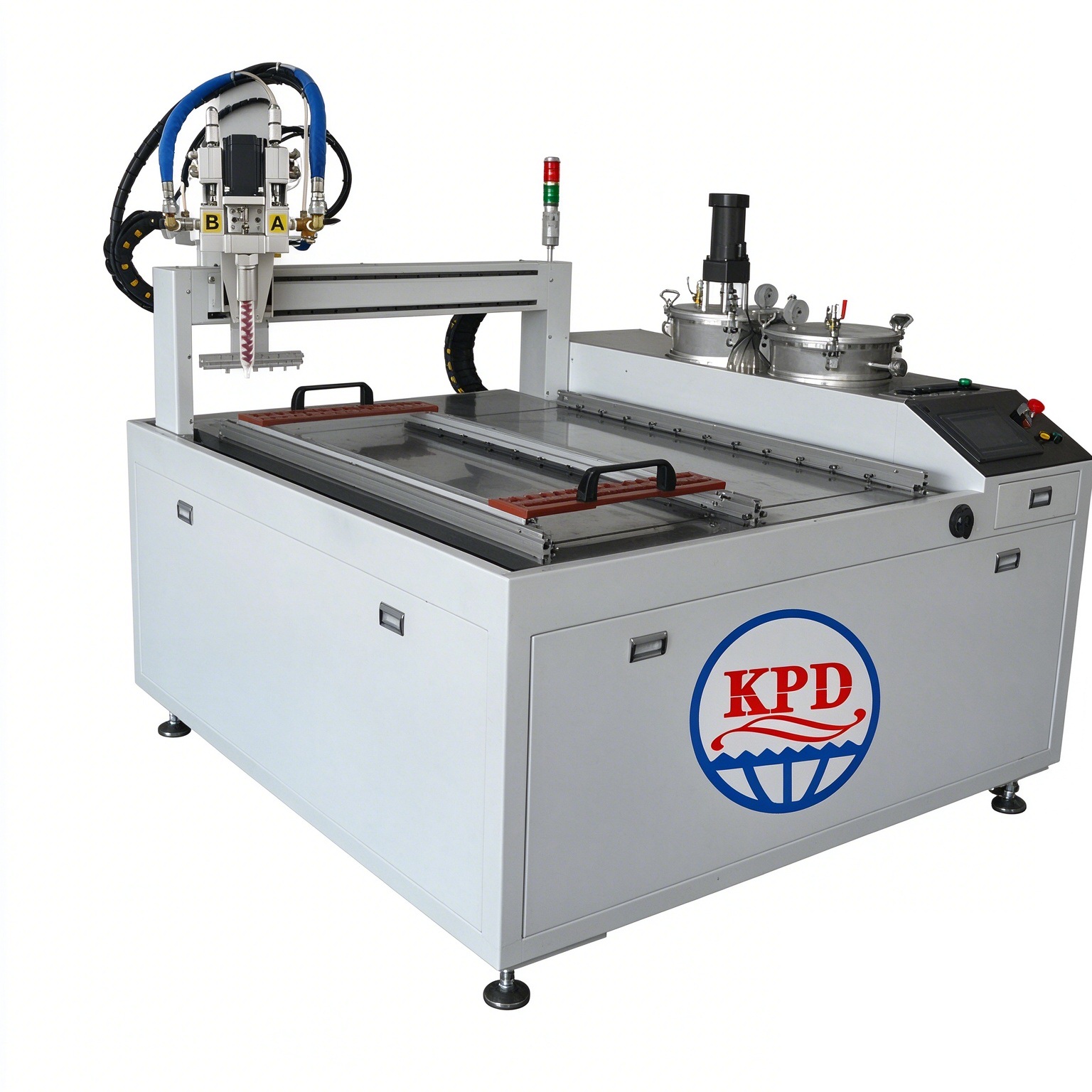
Automatic Epoxy Pouring and Filling Machine | 2K Epoxy Dispensing System
The Epoxy Pouring and Filling Machine is an automatic metering, mixing and dispensing system designed for accurate pouring and filling of two-component epoxy resin. The machine independently stores and meters Component A and Component B, mixes the materials according to the required ratio and dispenses the prepared epoxy into the target workpiece. The system is suitable for epoxy potting, filling, encapsulation, sealing and bonding applications. With precision metering pumps, programmable dispensing control and optional heating, stirring, vacuum and pressure functions, the machine can be configured for different epoxy viscosities, mixing ratios and production requirements. It is widely used for transformers, coils, PCBs, sensors, electronic components, LED products, power supplies, automotive electronics and EV-related components.
The Epoxy Pouring and Filling Machine is an automatic metering, mixing and dispensing system designed for accurate pouring and filling of two-component epoxy resin. The machine independently stores and meters Component A and Component B, mixes the materials according to the required ratio and dispenses the prepared epoxy into the target workpiece.
The system is suitable for epoxy potting, filling, encapsulation, sealing and bonding applications. With precision metering pumps, programmable dispensing control and optional heating, stirring, vacuum and pressure functions, the machine can be configured for different epoxy viscosities, mixing ratios and production requirements.
It is widely used for transformers, coils, PCBs, sensors, electronic components, LED products, power supplies, automotive electronics and EV-related components.
Key Features
- Precise A/B epoxy ratio adjustment: adjustable mixing ratio, stable metering, reduce epoxy waste.
- Automatic mixing: static mixer / dynamic mixer optional for uniform epoxy blending.
- Vacuum degassing & vacuum pouring: eliminate bubbles, perfect surface of epoxy casting.
- Large flow pouring design: suitable for big workpiece epoxy filling.
- Anti-blocking & automatic cleaning system: prevent epoxy curing and block pipeline.
- Continuous stable running, easy operation, low maintenance cost.
- Customizable fixture, epoxy tank, vacuum chamber size according to workpiece.
Applications
-
Electronics & Printed Circuit Boards (PCBs): Conformal potting and encapsulation for power supplies, relays, igniters, and control modules.
-
Automotive & EV Industry: Thermal conductive potting for Electric Vehicle Battery Management Systems (BMS), sensors, onboard chargers, and motors.
-
Electrical Components: Structural casting for high-voltage transformers, inductors, solenoids, and capacitors.
-
LED Lighting & Solar Enclosures: Waterproof and weatherproof sealing for outdoor LED drivers, junction boxes, and solar panel modules.
Working Principle
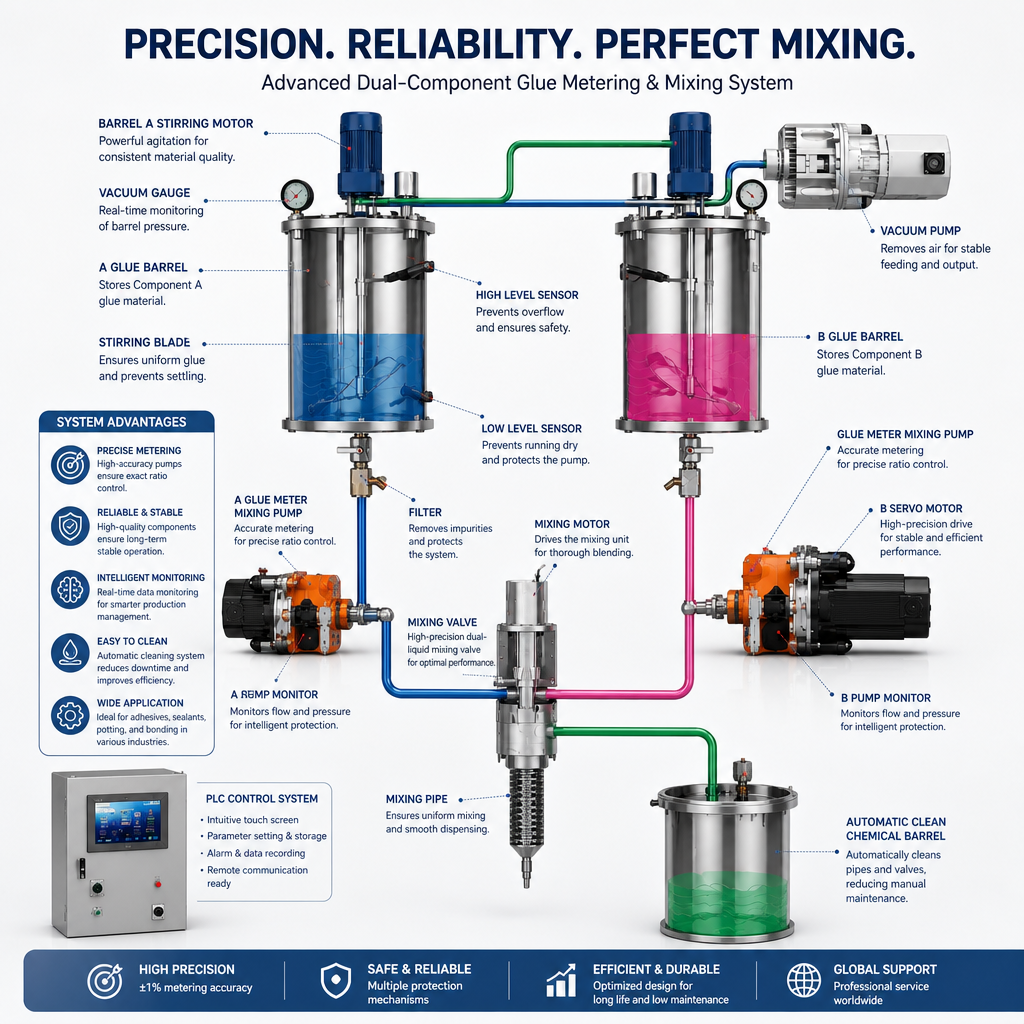
The two part potting compound filling machine separately pumps A component and B component potting compound from material tanks. The servo metering system controls the volume of A and B glue according to preset ratio. Two materials flow into mixing unit for fully mixing, then the mixed two part potting compound is dispensed and filled into workpieces. If equipped with vacuum system, the whole potting process runs under vacuum environment to prevent bubble generation.
Specication
Technical Specifications
| Item | Specification |
|---|---|
| Machine Type | Epoxy Metering, Mixing & Filling Machine |
| Material | 2K Epoxy Resin |
| Components | A + B |
| Mixing Ratio | Customizable |
| Metering System | Precision Metering Pumps |
| Mixing Method | Dynamic / Static Mixing |
| Dispensing Mode | Automatic / Programmable |
| Motion System | XYZ / CNC |
| Control System | PLC + Touchscreen HMI |
| Material Tanks | Independent A & B Tanks |
| Tank Functions | Heating / Stirring / Vacuum / Pressure |
| Dispensing Valve | Precision Dispensing Valve |
| Degassing | Optional Vacuum Degassing |
| Cleaning | Automatic / Manual |
| Applications | Pouring / Filling / Potting / Encapsulation |
| Configuration | Customizable |
Note: Exact specifications depend on material viscosity, mixing ratio, dispensing volume, curing characteristics and application requirements.
FAQ
What is an epoxy pouring and filling machine?
It is an automated system used to meter, mix and dispense two-component epoxy resin for filling, potting, encapsulation and sealing applications.
Can the machine process 2K epoxy resin?
Yes. The machine is specifically designed for two-component materials and can be configured according to the epoxy’s mixing ratio and viscosity.
What is the difference between epoxy pouring and epoxy dispensing?
Epoxy pouring generally refers to delivering epoxy into a cavity or workpiece, while dispensing describes the controlled delivery of a specified amount of material. An automated system can perform both processes.
Can it be used for transformer potting?
Yes. The machine can be configured for transformer coil filling, transformer potting and electrical insulation applications.
Can it reduce bubbles?
Vacuum degassing and controlled material delivery can help reduce trapped air and bubbles, depending on the epoxy material and process conditions.
Can the machine handle high-viscosity epoxy?
Yes, with the appropriate pump, heating and material-delivery configuration selected according to the epoxy viscosity.
Leave a Message
Leave us a message with any questions, we will reply as soon as possible.