Products
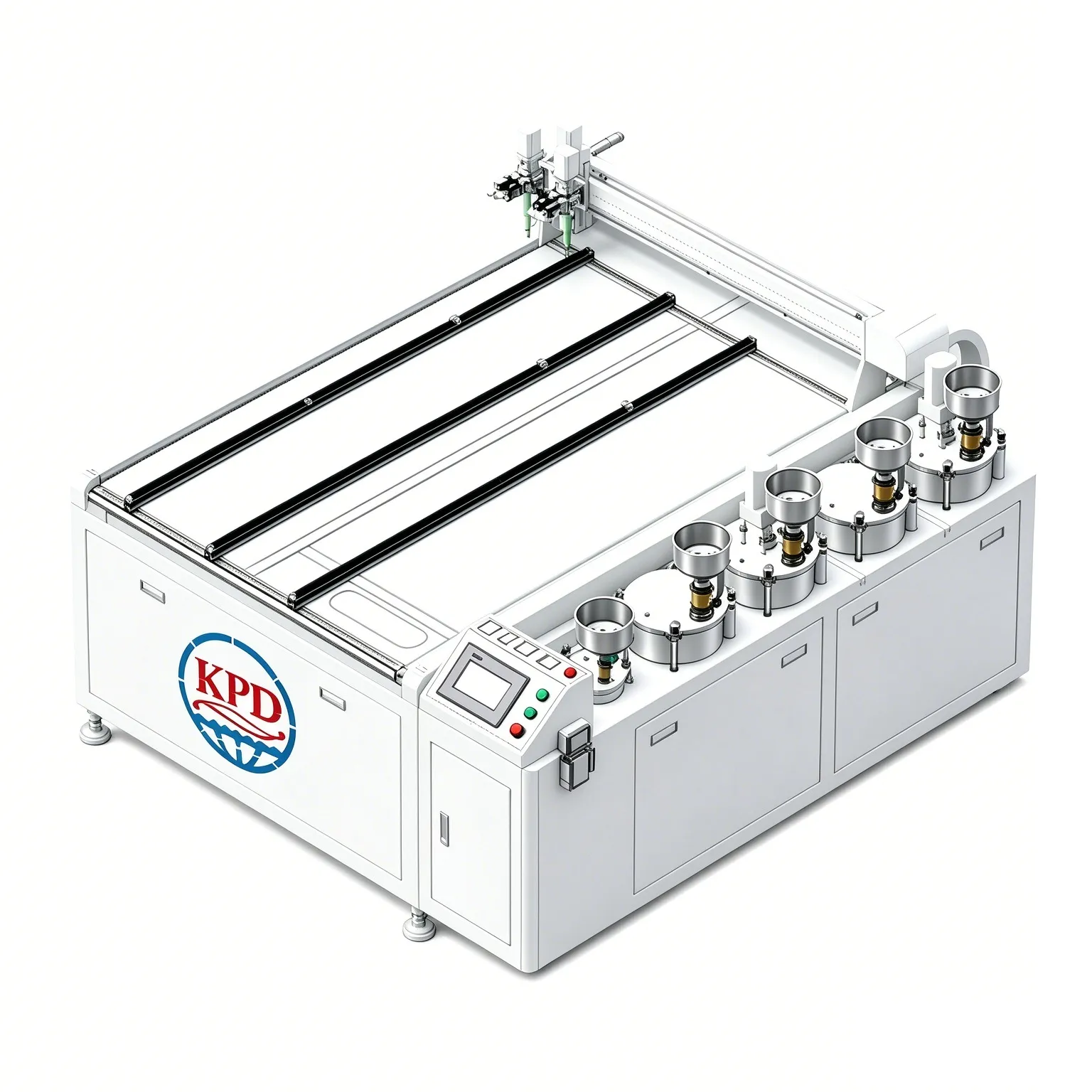
4-Tank 2K Resin Dispensing Machine with Auto-Switching and Metering System
The KPD 2K Two-Component Mixing and Dispensing Machine is designed for high-precision metering, automatic mixing, and accurate dispensing of two-part adhesives, including epoxy, polyurethane (PU), and silicone. Equipped with precision metering pumps and advanced mixing technologies (static or dynamic), it guarantees exact mix ratios and uniform, bubble-free dispensing for high-volume industrial production.
Independent A/B Material Storage for Precision Adhesive Dispensing
The KPD 4-Tank Two-Component Glue Dispensing Machine is designed for industrial applications that require controlled metering, mixing, potting, filling, and dispensing of two-component adhesives.
The system features four material storage tanks: two tanks for Component A and two tanks for Component B. This configuration provides additional material storage capacity and can support production processes that require separate storage and supply arrangements for each component.
Components A and B are stored separately and delivered to the metering system according to the specified mixing ratio. The two materials are then combined through a suitable mixing unit before being dispensed onto or into the target workpiece.
Depending on the adhesive properties and production requirements, the system can be configured with suitable metering pumps, mixing valves, static or dynamic mixers, and automated motion or control systems.
KPD provides customized adhesive dispensing solutions based on material viscosity, mixing ratio, dispensing volume, production cycle, and application requirements.
Key Features
-
Four-Tank Material Storage
Two A-component tanks and two B-component tanks provide a four-tank storage configuration for compatible two-part adhesive systems. - Controlled A/B Metering
The metering system is configured to deliver Components A and B according to the specified material ratio and required dispensing volume. - Consistent Material Mixing
A suitable static or dynamic mixing unit combines the two components before dispensing to help achieve a consistent mixture.mixture. - Flexible Potting and Dispensing
The system can be configured for potting, filling, sealing, bonding, or other adhesive application processes according to the workpiece and material requirements.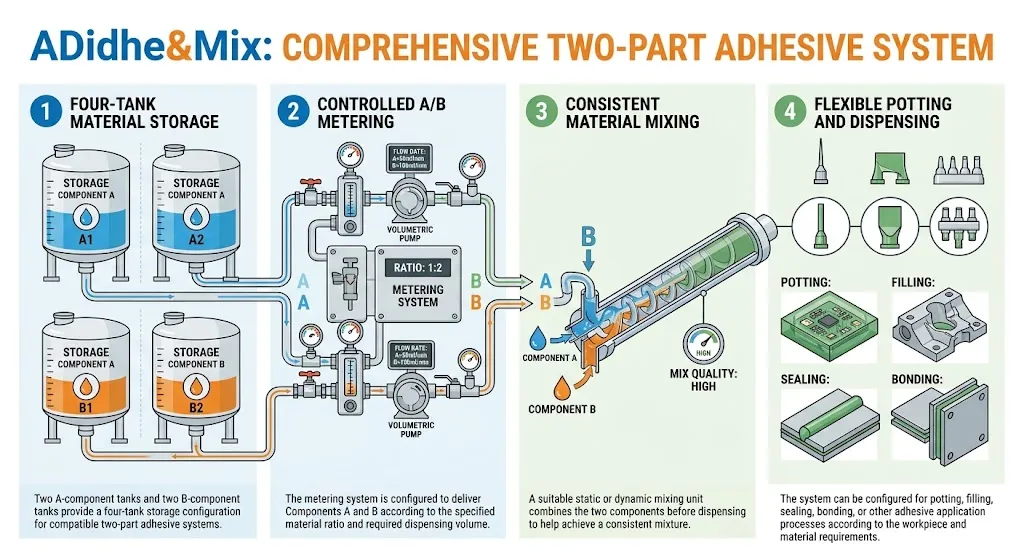
Working Principle of Automated 2 Component Sealant & Adhesive Metering and Dispensing Equipment
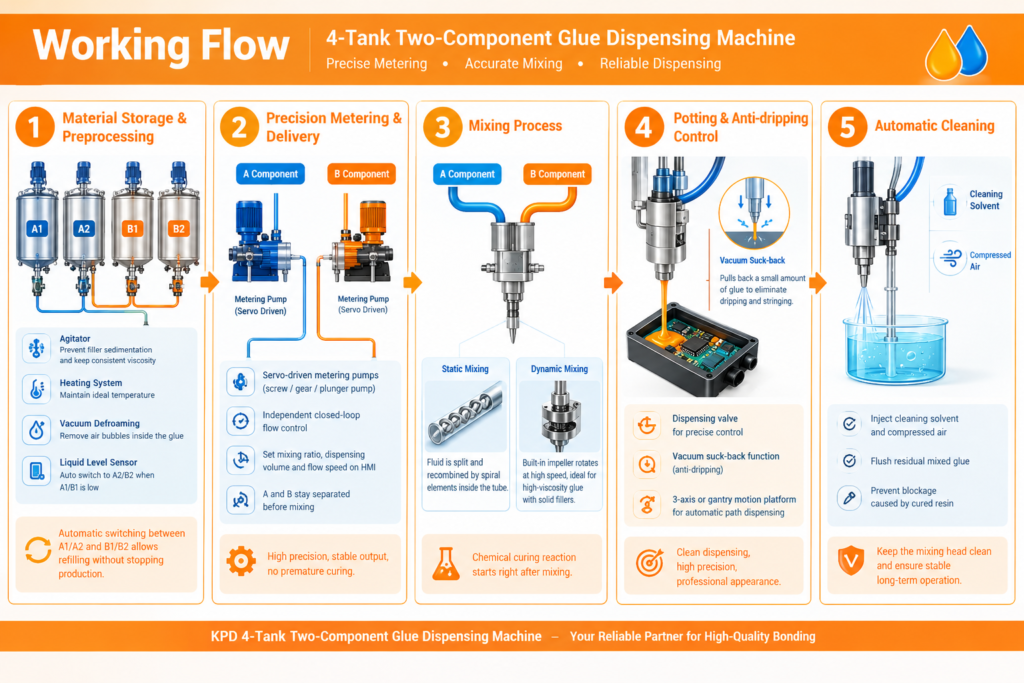
This automated 2 component sealant & adhesive metering and dispensing equipment is a positive displacement 2K meter mix dispense system. It separately meters Part A (base resin / sealant) and Part B (curing agent / hardener) and mixes them inline right before dispensing.
Step 1 — Material Loading
Load Component A into tanks A1 and A2, and Component B into tanks B1 and B2 according to the approved material-loading procedure.
The configured supply and metering system delivers the two components at the required flow rates and mixing ratio.
Step 3 — Mixing
Components A and B enter the selected mixing unit and are combined before application.
Step 4 — Dispensing or Potting
The mixed adhesive is dispensed into the target component, housing, or workpiece according to the process requirements.
Step 5 — Curing and Inspection
Allow the adhesive to cure under the material manufacturer’s recommended conditions, then inspect filling quality, mixing performance, and the finished workpiece.
Specification
Technical Specifications
| Item | Specification |
|---|---|
| Machine Type | 4-Tank Two-Component Glue Dispensing Machine |
| Material Storage | 4 independent tanks: 2 × A component, 2 × B component |
| Applicable Materials | Epoxy resin, polyurethane (PU), silicone and other compatible 2K adhesives |
| Metering System | Servo-driven metering pumps |
| Pump Options | Screw pump, gear pump or plunger pump |
| Mixing Ratio | Customizable according to adhesive requirements |
| Mixing Method | Static mixing tube or dynamic mixing valve |
| Dispensing Control | PLC control system with HMI touchscreen |
| Flow Rate | Customizable according to application requirements |
| Dispensing Volume | Programmable according to workpiece requirements |
| Tank Functions | Optional agitation, heating, vacuum degassing and liquid level monitoring |
| Material Switching | Automatic switching between A1/A2 and B1/B2, subject to configuration |
| Dispensing Valve | Precision dispensing valve with optional anti-drip function |
| Motion System | Optional 3-axis or gantry dispensing platform |
| Cleaning System | Optional mixing-head cleaning system, depending on adhesive and configuration |
| Applications | Electronic potting, component encapsulation, bonding, sealing and industrial dispensing |
| Customization | Tank capacity, mixing ratio, flow rate, dispensing path and automation level |
Applications
-
Electronics & Printed Circuit Boards: Conformal coating, PCB potting, power supply encapsulation, and transformer insulation.
-
Automotive Electronics: Sealing and encapsulating ADAS radar sensors, TPMS tire pressure modules, battery pack thermal interface materials (TIM), and ignition coils.
-
LED & Lighting Industry: Outdoor LED module potting, driver sealing, and waterproof strip encapsulation.
-
Renewable Energy & Industrial Manufacturing: Smart water meter sealing, filter end-cap bonding, and structural honeycomb panel spray/gluing.
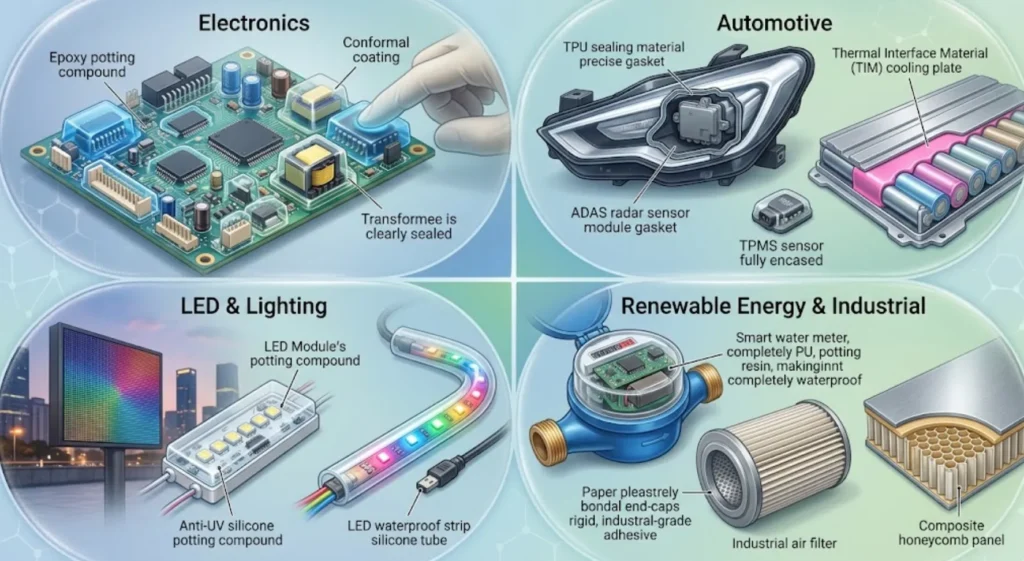
glue dispensing machine application
Frequently Asked Questions (FAQ)
1. What is a 4-Tank Two-Component Glue Dispensing Machine?
A 4-tank two-component glue dispensing machine is an industrial system designed for storing, metering, mixing, and dispensing two-component adhesives. It features two A-component tanks and two B-component tanks, supporting continuous material supply and automated dispensing for industrial production.
2. How does a 4-tank AB glue dispensing machine work?
The machine stores A and B components separately in four tanks. The metering system delivers each component according to a preset mixing ratio. The two materials are then combined in a static mixing tube or dynamic mixing valve before being dispensed onto the workpiece.
3. Why does the machine use four tanks instead of two?
The four-tank configuration provides two tanks for each component. Depending on the system design, it can support automatic changeover between supply tanks, allowing operators to replenish materials while reducing production interruptions.
4. What types of adhesives can this machine dispense?
The machine can be configured for compatible two-component materials, including epoxy resin, polyurethane (PU), and silicone adhesives. The pump type, tank design, mixing method, and sealing materials should be selected according to adhesive viscosity, chemical properties, and curing requirements.
5. What mixing ratios are supported?
The mixing ratio can be customized according to the adhesive formulation and production requirements. Common ratios include 1:1, 2:1, 3:1, 4:1, 5:1, and 10:1. The available ratio range depends on the selected metering system.
6. How accurate is the A/B mixing ratio?
Mixing ratio accuracy depends on the metering pump, material viscosity, operating conditions, and calibration. KPD can configure a suitable metering system according to the required ratio accuracy and adhesive characteristics. Please confirm the target accuracy for your application.
7. Can the machine handle high-viscosity adhesives?
Yes. The machine can be configured for suitable medium- to high-viscosity adhesives by selecting appropriate metering pumps, feeding systems, and dispensing valves. Heating and agitation can also be considered when compatible with the adhesive.
8. What is the difference between static and dynamic mixing?
A static mixer uses fixed internal elements to divide and recombine the A and B components without moving parts. A dynamic mixer uses a rotating mixing element to blend the materials. The appropriate option depends on viscosity, filler content, mixing requirements, and adhesive pot life.
9. Can the machine automatically switch between tanks?
Yes, automatic switching between A1/A2 and B1/B2 can be incorporated when the machine is equipped with the appropriate level sensors, valves, and control logic. This configuration helps reduce downtime during material replenishment.
Leave a Message
Leave us a message with any questions, we will reply as soon as possible.