Products
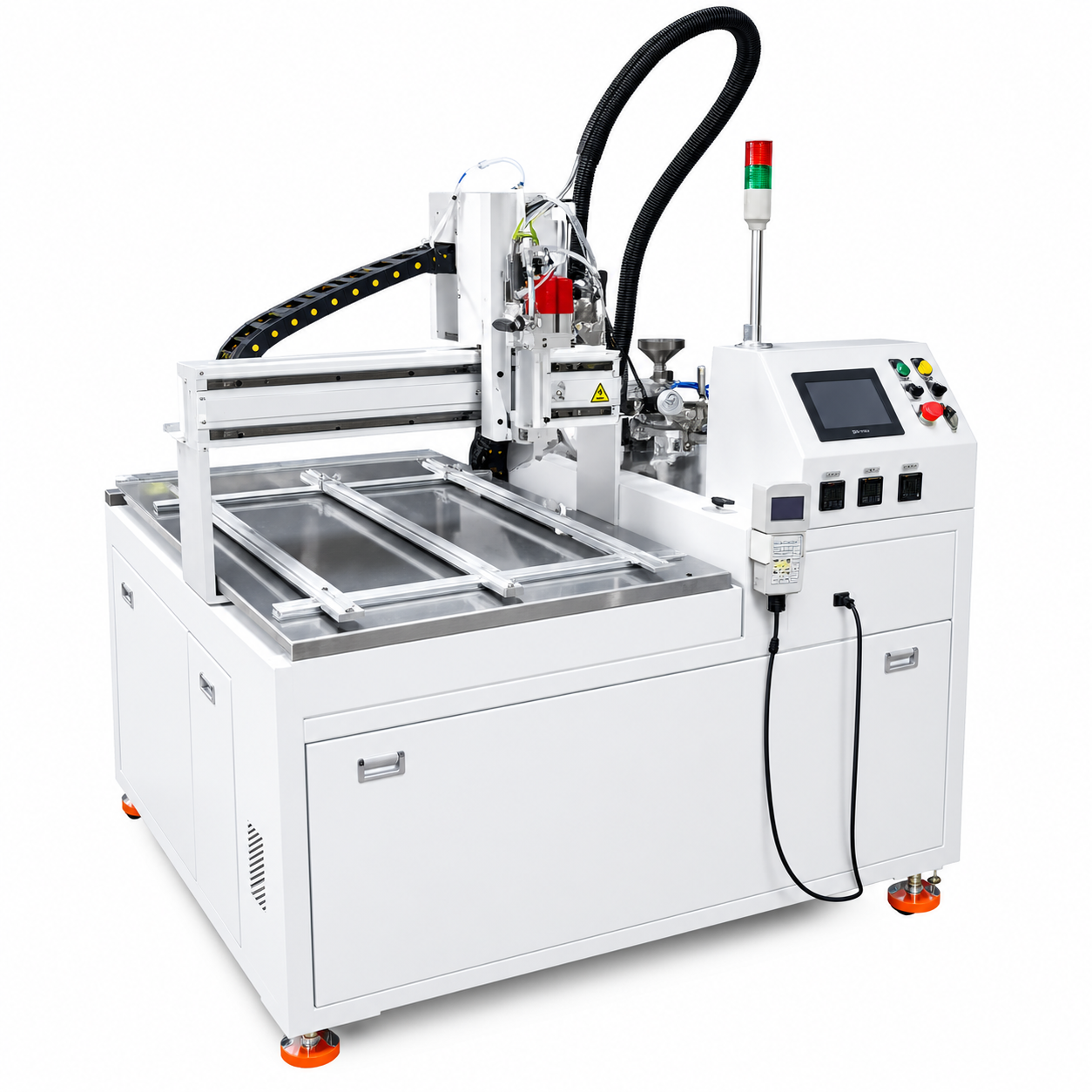
2K Mixing and Dosing Machine for Epoxy, PU and Silicone
The 2K Mixing and Dosing Machine is an automatic two-component dispensing system designed for accurate metering, mixing and dispensing of epoxy, silicone, polyurethane and other 2K materials. It provides precise mixing ratios, consistent dispensing and reliable potting for industrial applications.
The 2K Mixing and Dosing Machine is an industrial metering and dispensing system designed for accurate mixing and application of two-component materials, including epoxy resin, polyurethane (PU), silicone and other two-part adhesives.
The system stores Components A and B separately and delivers them through precision metering pumps according to a preset mixing ratio. The materials are combined in a mixing unit before being dispensed onto workpieces for potting, bonding, sealing, encapsulation and other industrial applications.
With configurable mixing ratios, dispensing volumes and automation options, this 2K mixing and dosing system helps manufacturers improve process consistency, reduce material waste and increase production efficiency. It can be customized for different material viscosities, production requirements and workpiece geometries.
Key Features
- Accurate 2K Metering: Independently meters Components A and B according to the required mixing ratio.
- Automatic Mixing: Integrates a static or dynamic mixing unit for uniform material mixing.
- Wide Material Compatibility: Suitable for two-component epoxy, PU, silicone and compatible industrial adhesives.
- Independent Material Tanks: Keeps the two components separated before mixing.
- Flexible Ratio Settings: Configurable to meet different material and process requirements.
- Controlled Dispensing: Supports precise delivery of material for potting, bonding, sealing and encapsulation.
- Automation Integration: Can be integrated with XYZ dispensing robots, production lines and dedicated fixtures.
- Optional Material Conditioning: Heating, stirring, vacuum degassing and pressure control can be configured according to material properties.
- Customizable Configuration: Pump type, tank capacity, mixing method and dispensing valve can be selected based on application needs。
Working principle
Step 1 – Separate Material Storage
Components A and B are stored in independent tanks to prevent premature mixing and curing.
Step 2 – Material Preparation
Depending on the material requirements, the system can use heating, stirring, vacuum degassing or pressure control to maintain suitable dispensing conditions.
Step 3 – Precision Metering
Dedicated pumps deliver Components A and B at the preset ratio and required flow rate.
Step 4 – Mixing
The two components enter a static or dynamic mixing unit, where they are combined before application.
Step 5 – Automatic Dispensing
The mixed material is dispensed onto the target workpiece manually, through a dispensing valve or by an automated motion platform.
Step 6 – Potting, Bonding or Sealing
The dispensed material fills cavities, coats components, bonds surfaces or seals assemblies according to the production process.
Applications
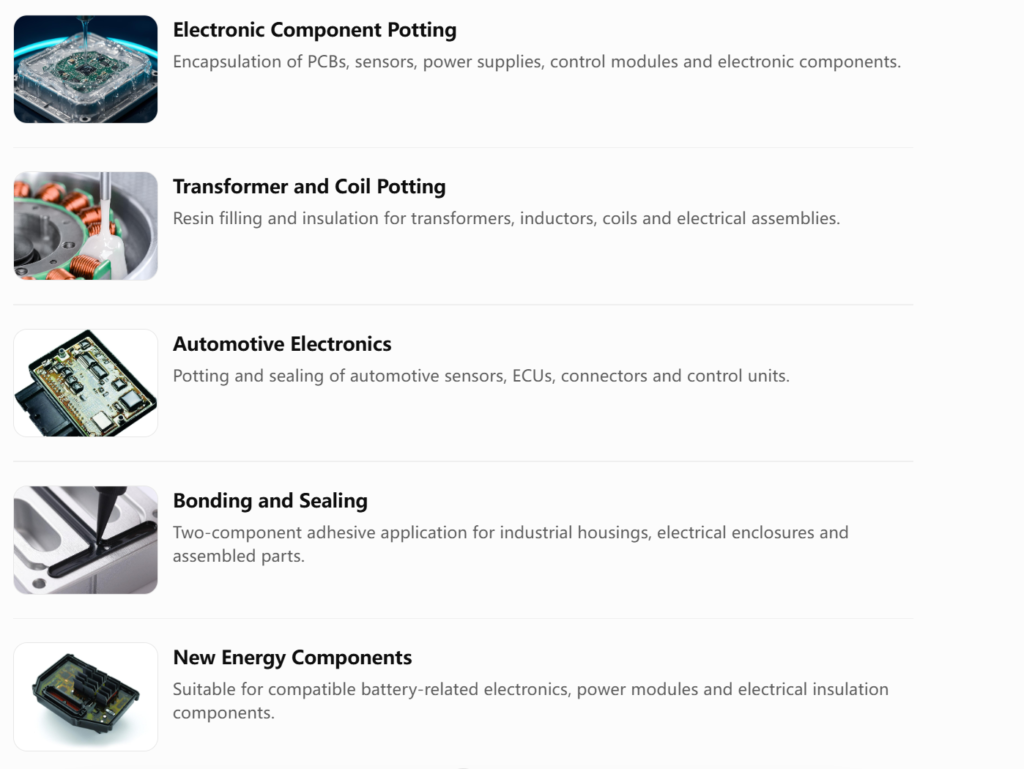
6. Technical Specifications
| Item | Specification |
|---|---|
| Equipment Type | 2K Mixing and Dosing Machine |
| Material Type | Epoxy, PU, Silicone, Two-Component Adhesives |
| Component System | A + B |
| Metering System | Precision Metering Pumps |
| Mixing Method | Static or Dynamic Mixing |
| Mixing Ratio | Customizable according to material |
| Dispensing Mode | Manual or Automatic |
| Control System | PLC and Touchscreen HMI, if configured |
| Motion System | Optional XYZ 3-Axis Robot |
| Material Tank | Optional Capacity and Configuration |
| Material Conditioning | Optional Heating, Stirring and Vacuum |
| Application | Potting, Bonding, Sealing and Encapsulation |
| Customization | Available according to process requirements |
7. Advantages
Why Choose Our 2K Mixing and Dosing Machine?
Consistent Mixing Ratio
Independent metering of Components A and B helps maintain the required material ratio throughout the dispensing process.
Improved Production Efficiency
Automated material delivery and dispensing can reduce repetitive manual operations and support more consistent production.
Reduced Material Waste
Controlled dispensing volumes help minimize excess adhesive and unnecessary material consumption.
Flexible Application Options
The system can be configured for different materials, workpiece sizes, dispensing volumes and production processes.
Integration with Automation
Optional robotic motion systems and production-line integration support scalable manufacturing.
Process-Specific Customization
Tank capacity, pump technology, mixing unit and control functions can be selected to match material characteristics and factory requirements.
8. Product Applications by Material
| Material | Typical Applications |
|---|---|
| Epoxy Resin | Electronic potting, transformer insulation, PCB encapsulation |
| Polyurethane (PU) | Electronic protection, component sealing, industrial bonding |
| Silicone | Electrical insulation, sensor encapsulation, flexible sealing |
| Two-Component Adhesives | Structural bonding, enclosure sealing and assembly |
Material compatibility depends on viscosity, mixing ratio, curing time, chemical properties and the selected pump and valve configuration.
9. FAQ
What is a 2K mixing and dosing machine?
A 2K mixing and dosing machine meters two separate components, typically A and B, mixes them at a specified ratio and dispenses the mixed material for industrial applications.
What materials can a 2K mixing and dosing machine handle?
Depending on the machine configuration, it can process two-component epoxy, polyurethane, silicone and other compatible adhesives or potting compounds.
Can the machine handle different mixing ratios?
Yes. The metering system can be configured for different mixing ratios within its supported operating range. The required ratio should be confirmed according to the material manufacturer’s specifications.
What is the difference between a static mixer and a dynamic mixer?
A static mixer uses fixed mixing elements to blend the components as they flow through the mixing tube. A dynamic mixer uses an actively driven mixing mechanism. The appropriate choice depends on material properties, flow rate and mixing requirements.
Can the system be integrated with an automatic dispensing robot?
Yes. Compatible configurations can integrate with an XYZ 3-axis dispensing robot, fixtures, conveyors or other automation equipment.
Can the machine be customized?
Yes. Tank capacity, metering pump type, mixing method, dispensing valve, material conditioning and automation functions can be configured to suit the application.
How do I select the right 2K dosing system?
Provide the material type, A mixing ratio, viscosity, required output, dispensing volume, workpiece dimensions and production cycle requirements. These details help determine a suitable configuration.
Leave a Message
Leave us a message with any questions, we will reply as soon as possible.